


18 Aug How to write a blog that Ranks (With Free Templates)
How to Write Blogs That Rank (with Free Templates)
Ever felt like you poured your heart into a blog post and crickets? No views. No shares. No ranking. Just a well-written ghost on the web.
You’re not alone.
The truth is, writing blogs that rank in 2025 takes more than just good grammar and a catchy title. It’s a mix of smart strategy, Google-friendly structure, and reader-focused storytelling.
And the best part? You don’t need fancy tools or a degree in SEO. In this guide, I’ll show you exactly how to write blogs that rank — plus give you free templates to kick things off.

Why Blog SEO Still Matters in 2025
With AI, voice search, and video on the rise, you might be wondering — is blogging still worth it?
Short answer: Yes. Long answer: Heck yes.
Blogs help:
- Rank on Google
- Build authority
- Drive evergreen traffic
- Support email marketing and social
And with AI tools spitting out content faster than ever, quality SEO blogging is what separates winners from the noise.
Understanding What Google Wants
Before you write a single word, let’s crack the code behind what Google looks for in high-ranking blogs.
The E-E-A-T Principle
Google loves content that shows:
- Experience (Have you done what you’re writing about?)
- Expertise (Do you know your stuff?)
- Authoritativeness (Are others trusting and referencing you?)
- Trustworthiness (Does your content feel safe and real?)
Write like a human. Share real stories. Add proof. That’s how you earn Google’s trust.
Search Intent: The Secret Sauce
Every search has an intent. Think of it like a question behind the query.
- “Best budget laptops 2025” → They want comparisons.
- “How to make cold brew” → They need a step-by-step guide.
- “AI writing tools free” → They’re looking for tools.
Match your blog format to the intent, and you’re halfway to the top of the search page.
Laying the Groundwork Before You Write
Imagine building a house without a blueprint. Writing without prep is just like that — risky and messy.
Keyword Research Basics
Pick a keyword that’s:
- Relevant to your audience
- Not too competitive
- Searched often
Use long-tail keywords like “how to write blogs that rank fast” instead of just “blog writing.”
Free Keyword Tools You Can Use
- Google Keyword Planner
- Ubersuggest
- AnswerThePublic
- AlsoAsked
- Keywords Everywhere (browser extension)
Competitor Analysis
Search your keyword and open the top 5 results:
- What’s their structure?
- What do they cover?
- What’s missing?
Now you know what to do — and what to do better.
Topic Clustering & Content Mapping
Don’t just write isolated blogs. Think of them as part of a content web. Use pillar posts (big guides) and cluster content (related small posts) to build authority.
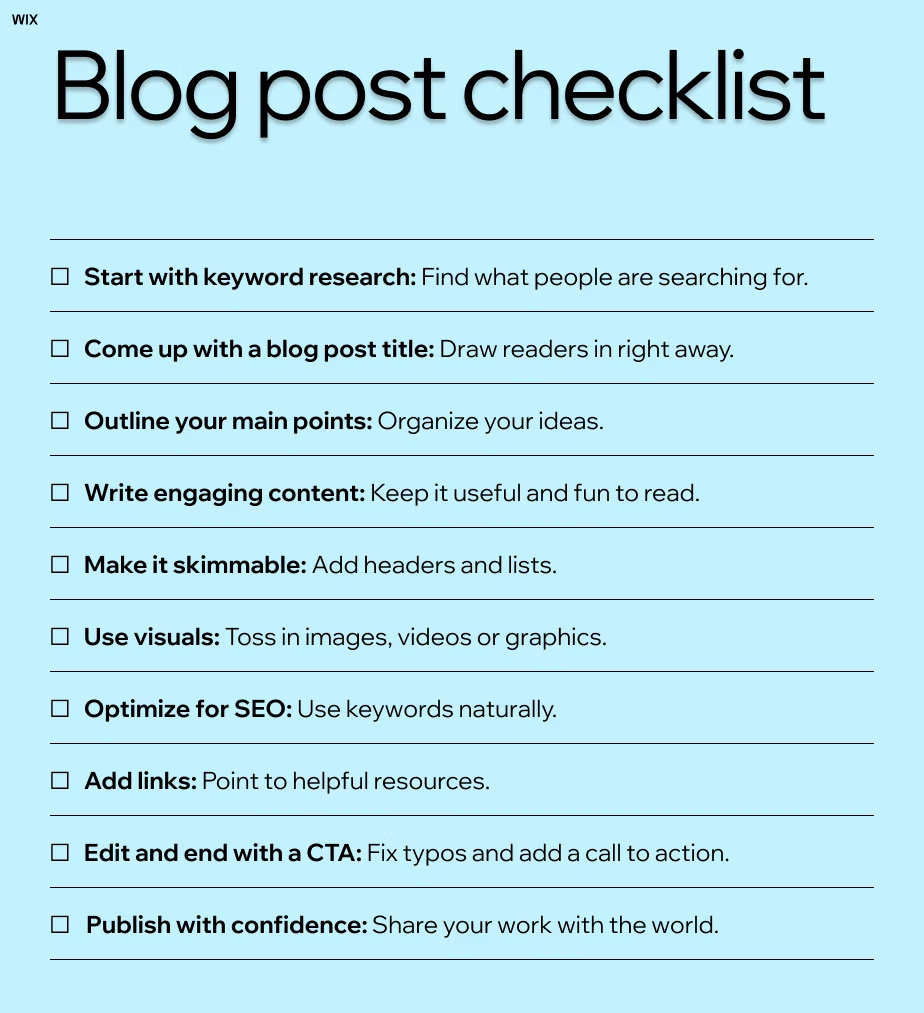
Crafting Blog Posts That Actually Rank
Here’s where the magic begins.
Blog Structure That Works
Great blogs follow a predictable but powerful format:
Catchy Headlines (H1 & H2)
Use:
- Numbers (e.g., 10 Tips…)
- Power words (e.g., Ultimate, Proven)
- Brackets (e.g., [Template], [2025])
Engaging Introductions
Make your intro:
- Personal (“Ever struggled with…?”)
- Brief
- Focused on pain + promise
Value-Packed Subheadings (H3 & H4)
Break up content. Make it scannable. Think like a reader in a hurry.
How to Use Keywords Naturally
Don’t force it. Place your main keyword in:
- H1
- First 100 words
- At least one H2
- Meta title + meta description
Use synonyms and LSI keywords too (Google’s smart enough to understand).
Writing for People, Optimizing for Google
Your job? Make it feel like a conversation, not a robot manual.
Use:
- Personal pronouns (you, I, we)
- Short sentences
- Metaphors
- Questions
- Real-life examples
Using Free Blog Templates (Downloadable)
Struggling to format your blog? Use these proven templates:
Template 1: Listicle Blog
Title: 7 Free Tools That Help You Write Blogs That Rank
- Intro with benefit
- Bullet points with tool name, features, use-case
- Conclusion + CTA
Template 2: How-To Guide
Title: How to Write a Blog Post That Ranks in 7 Steps
- Intro (problem + promise)
- Step-by-step sections
- Tools or resources
- Conclusion + FAQ

Template 3: Review or Comparison Post
Title: Jasper vs. ChatGPT: Which AI Writer Wins in 2025?
- Intro (overview of tools)
- Feature-by-feature comparison
- Pros/cons
- Verdict + recommendation
On-Page SEO Checklist for Every Blog
Make sure every post checks these boxes:
Meta Titles & Meta Descriptions
- Keep meta titles under 60 characters
- Descriptions under 155 characters
- Include your focus keyword
Internal & External Linking
- Link to your own related blogs (internal)
- Link to trusted external sites (research, stats, tools)
Optimizing Images
- Use descriptive filenames
- Add alt text
- Compress images (TinyPNG or Squoosh)
URL Structure & Slugs
Bad: /blog1234?id=456
Good: /write-blogs-that-rank
Simple. Clean. Keyword-rich.
Post-Publish Strategy
You hit publish. Now what?
Promoting Your Blog
- Share on social (Twitter, LinkedIn, Pinterest)
- Email it to your list
- Turn it into a video or carousel
Updating Old Posts
Google loves fresh content. Update:
- Stats
- Screenshots
- New strategies
- Re-optimize keywords
Monitoring Results (Free Tools)
- Google Search Console – track rankings & clicks
- Google Analytics 4 – see traffic & behavior
- Ubersuggest – monitor keyword changes
Common Blog SEO Mistakes to Avoid
Even pros mess this up.
Keyword Stuffing
Shoving keywords in every sentence? That’s a red flag. Write for humans first.
Ignoring Mobile Optimization
Over 60% of traffic is mobile. Use responsive themes and test your blog on phone screens.
Writing for Robots, Not Readers
If your blog sounds like it was written by a textbook, it’s game over. Make it fun and friendly.
Final Thoughts
Blogging isn’t dead — it’s just evolving. If you want to stand out in 2025, it’s not about writing more. It’s about writing smart, writing strategically, and writing for real people.
So whether you’re a freelancer, business owner, or just someone with a message — follow these tips, use the templates, and start ranking your content like a pro.
Remember: Every blog is a door. Make sure yours opens up to value.
Frequently Asked Questions
Q1. What’s the ideal blog post length to rank on Google?
A: Typically, 1500–2500 words work best for SEO, but focus on quality over quantity.
Q2. Can I write blogs that rank without paid tools?
Absolutely. Free tools like Ubersuggest, Google Search Console, and Keyword Planner are great starters.
Q3. How long does it take for a blog to rank?
It varies, but on average 3–6 months. Consistency + good SEO speeds it up.
Q4. How many keywords should I use per blog post?
Target 1 main keyword and 3–5 related secondary keywords naturally.
Q5. Are AI writing tools helpful or harmful for SEO?
They can help with drafts and ideas, but always edit and humanize the content for best results.
No Comments