
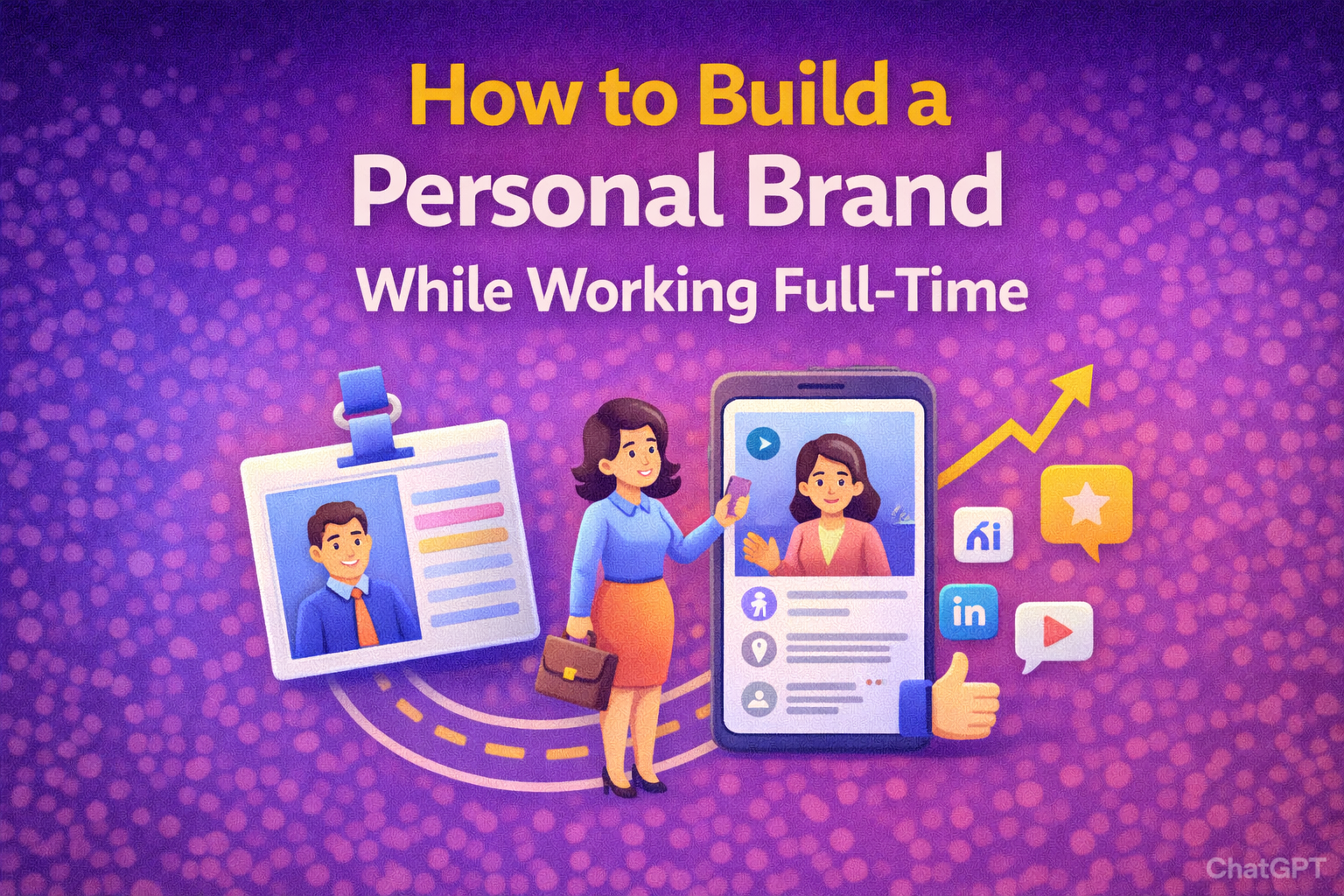
19 Feb How to Build a Personal Brand While Working Full-Time
Building a personal brand while working full-time may sound overwhelming, but in 2026 it is one of the smartest career moves you can make. Whether you want career growth, better job opportunities, freelancing income, or long-term business freedom, a strong personal brand gives you visibility and authority. The good news is that you do not need to quit your job to build one. You need clarity, consistency, and a structured approach.
Why Personal Branding Matters More Than Ever
In today’s digital world, opportunities often come to people who are visible and credible. Employers, clients, and collaborators search online before making decisions. If you do not control your digital presence, someone else defines your professional image.
A personal brand is not about becoming famous. It is about being known for something specific. When you consistently share insights, experiences, and expertise in your field, people begin associating your name with that niche. Over time, this builds trust and authority, which translates into career growth and income opportunities.
Step 1: Define Your Positioning Clearly
Before posting content or creating profiles, you must define your positioning. Ask yourself what you want to be known for. It could be digital marketing, SEO, content creation, finance, fitness, tech, or any specialized skill.
Clarity is important because a scattered personal brand does not attract a focused audience. When you consistently talk about one core area, your credibility strengthens. Positioning helps people understand why they should follow you and what value they will receive.
Step 2: Choose One Primary Platform
Many working professionals make the mistake of trying to build presence everywhere. This often leads to burnout. Instead, choose one primary platform that aligns with your strengths and audience.
LinkedIn works well for corporate professionals. Instagram is strong for visual storytelling and creators. YouTube helps build deeper authority. Blogging builds SEO-based long-term visibility. Select one platform, understand its algorithm, and focus on consistent growth.
Consistency on one platform is more powerful than irregular presence on five.
Step 3: Create Value-Driven Content
Personal branding is not about posting selfies or random thoughts. It is about sharing value. You can share lessons from your job, case studies, industry insights, mistakes you learned from, or practical tips related to your expertise.
You do not need to reveal confidential company information. Instead, focus on general knowledge and professional growth insights. Over time, your audience begins to see you as a problem-solver and thought leader.
Content builds trust. Trust builds opportunities.
Step 4: Manage Time Strategically
The biggest challenge for full-time professionals is time management. Building a personal brand does not require hours daily. Even 30–45 minutes a day is enough if used strategically.
You can batch-create content on weekends and schedule it during weekdays. Planning content in advance reduces stress and maintains consistency. Remember, personal branding is a long-term game. Sustainable effort is better than short bursts of extreme activity.
Step 5: Build Authority Through Consistency
Authority is not built overnight. It develops when you show up regularly. Posting once and disappearing for a month weakens brand perception.
Consistency signals seriousness. When your audience sees you sharing insights week after week, they begin trusting your expertise. Over time, your network grows organically through engagement, shares, and recommendations.
Authority is built through repetition and reliability.
Step 6: Network Intentionally
Personal branding is not only about content creation; it is also about relationships. Engage with other professionals in your niche. Comment thoughtfully, share others’ insights, and participate in meaningful discussions.
Networking increases visibility and accelerates growth. When people in your industry recognize your name, your credibility increases. Collaboration opportunities often emerge from consistent engagement rather than viral posts.
Step 7: Develop a Long-Term Vision
Before building your brand, clarify your long-term goal. Do you want promotions? Freelancing income? Consulting? A future business? Your strategy should align with your vision.
For example, if you aim to transition into digital marketing consulting, your content should reflect marketing insights. If you want corporate growth, focus on leadership and industry expertise.
A personal brand without direction lacks impact.
Common Mistakes to Avoid
Many professionals delay personal branding because they fear judgment from colleagues or friends. However, in 2026, building an online presence is becoming normal and respected. Another common mistake is focusing only on follower count. Engagement and authority matter more than vanity metrics.
Avoid copying others blindly. Authenticity differentiates you. Your experiences, challenges, and perspectives make your brand unique.
The Long-Term Benefits of Personal Branding
When built consistently, a personal brand creates career leverage. It increases job security because you are known beyond your organization. It opens freelance opportunities, speaking engagements, consulting projects, and collaborations.
Most importantly, it gives you control over your professional narrative. Instead of waiting for opportunities, you attract them.
Conclusion
Building a personal brand while working full-time is not about working more hours. It is about working strategically. With clear positioning, consistent content, smart time management, and long-term vision, you can build authority without leaving your job.
In 2026, visibility is power. The sooner you start building your personal brand, the stronger your professional future becomes.
No Comments