Let me ask you something. When was the last time you had a seamless experience with a brand across every channel?
If you're like most consumers in 2026, the answer is: "Rarely." Most brands still operate in silos—social media teams, email teams, website teams, and in-store teams working independently. The result? A fragmented, confusing experience that frustrates customers and destroys trust.
Here's the reality: Customers don't think in channels. They think in experiences. They expect a seamless journey—from discovery to research to purchase to support—all connected, consistent, and personalized. In 2026, omnichannel marketing isn't just nice to have. It's essential.
In this guide, I'll show you exactly how to create seamless omnichannel experiences in 2026. Whether you're a digital marketing professional, a business owner, or a student taking a digital marketing course, this is your blueprint for winning with omnichannel marketing.
Let's dive in.
1. Omnichannel vs. Multichannel: The Critical Difference
Before we get into strategy, let's understand the difference between multichannel and omnichannel.

1.1 Multichannel: Channels Working Independently
Multichannel marketing means having a presence on multiple channels. You're on social media, email, and your website. But each channel operates independently. The experience is fragmented. The customer feels like they're dealing with different brands.
1.2 Omnichannel: Channels Working Together
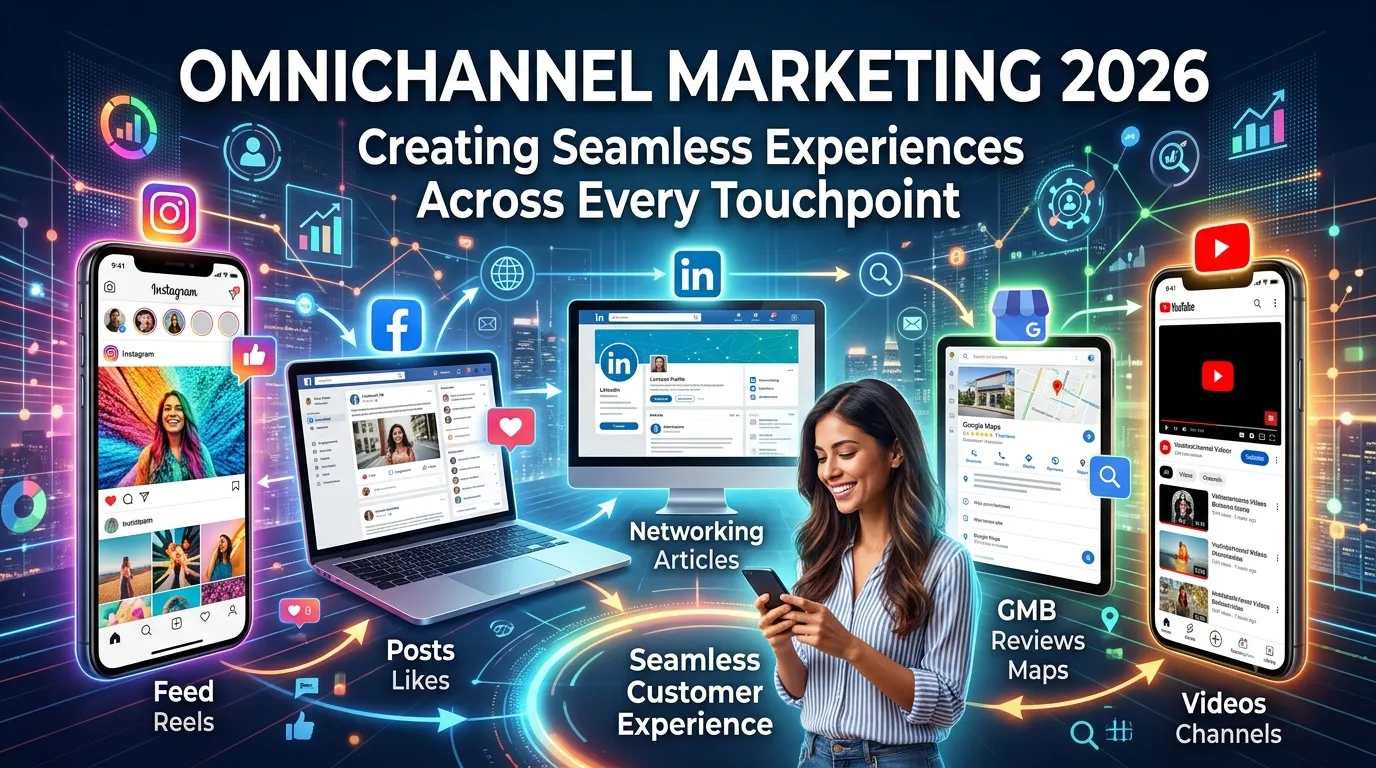
Omnichannel marketing means all channels are connected. The experience is seamless, consistent, and personalized across every touchpoint. The customer feels like they're dealing with one brand—not many.
The key difference: Multichannel is about your presence. Omnichannel is about the customer's experience.
2. Why Omnichannel Marketing Matters in 2026
Here's why omnichannel is essential this year.
2.1 Customer Expectations Have Changed
Customers expect seamless experiences. They expect to move between channels without friction. They expect personalized interactions based on their history and preferences. When they don't get it, they leave.
Research shows that customers expect brands to connect their interactions across channels. They want consistency, personalization, and seamlessness.
2.2 AI Makes Omnichannel Possible at Scale
AI is the engine that makes omnichannel work. It connects data across channels, enables personalization at scale, and creates seamless experiences.
2.3 Omnichannel Drives Revenue
Companies with strong omnichannel customer engagement retain more customers and see higher purchase rates compared to those with weak omnichannel strategies.
3. The Omnichannel Customer Journey in 2026
Let's look at what the omnichannel customer journey looks like.
3.1 Discovery
The customer discovers your brand through one channel. It might be a social media ad, a Google search result, or a recommendation from a friend. The experience is seamless and personalized.
3.2 Research
The customer does research across multiple channels. They visit your website, watch videos on YouTube, read reviews, and check social media. The experience is consistent across all channels.
3.3 Purchase
The customer makes a purchase on their preferred channel—online, in-app, or in-store. The experience is frictionless, personalized, and connected to their previous interactions.
3.4 Support
The customer needs support. They reach out through any channel—chatbot, email, social media, phone. The experience is seamless and informed by their history.
3.5 Advocacy
The customer becomes a brand advocate. They share their experience, recommend your brand, and continue to engage. The cycle continues.
4. How AI Powers Omnichannel Marketing
AI is the engine that makes omnichannel work. Here's how.
4.1 Unified Customer Data
AI connects data across channels. It creates a single customer view—unified data that powers personalization across every touchpoint.
4.2 Real-Time Personalization
AI delivers personalized experiences in real-time. Based on the customer's behavior, AI adjusts messaging, offers, and content.
4.3 Predictive Analytics
AI predicts customer behavior. It anticipates needs, recommends next actions, and prevents churn. This enables proactive engagement across channels.
4.4 Automated Workflows
AI automates omnichannel workflows. It triggers actions across channels based on customer behavior. For example, a customer who abandons a cart receives a personalized email, a social media ad, and a website pop-up.
5. How to Build an Omnichannel Strategy
Here's how to build a winning omnichannel strategy in 2026.
Step 1: Map the Customer Journey
Start by mapping your customer's journey across all touchpoints. Identify every interaction—from discovery to advocacy. Understand what the customer is doing, thinking, and feeling at each stage.
Step 2: Unify Your Data
Connect data across all channels. Create a single customer view. This is the foundation of omnichannel marketing.
Step 3: Personalize Every Touchpoint
Use AI to personalize every interaction. Tailor messaging, offers, and content based on the customer's behavior, preferences, and history.
Step 4: Connect Your Channels
Make sure your channels work together. A customer who interacts with your brand on social media should have a seamless experience when they visit your website or open your email.
Step 5: Measure What Matters
Track omnichannel metrics. Retention, customer lifetime value, and cross-channel engagement are more important than channel-specific metrics.
6. Omnichannel Best Practices
Here are the best practices that drive success.
6.1 Consistency Across Channels
Your brand voice, messaging, and experience should be consistent across every channel. Customers should feel like they're dealing with one brand—not many.
6.2 Contextual Relevance
Personalization should be contextual. A customer who just visited your website should receive relevant messaging on social media. A customer who abandoned a cart should receive a timely email.
6.3 Seamless Transitions
Make it easy for customers to move between channels. A customer who starts on social media should be able to continue the journey on your website without friction.
6.4 Privacy by Design
Respect customer privacy. Be transparent about data collection and use. Build trust through responsible data practices.
7. Real-World Examples of Omnichannel Success
7.1 The Digital Marketing Course Provider
A digital marketing course provider built an omnichannel experience across LinkedIn, email, and their website. A prospect discovered them on LinkedIn, signed up for an email series, and was guided to a webinar. The experience was seamless, personalized, and consistent across every touchpoint. They saw a 300% increase in enrollment.
7.2 The Ecommerce Brand
An ecommerce brand connected Instagram, email, and their website. A customer discovered a product on Instagram, received personalized email recommendations, and made a purchase on the website. The experience was seamless and personalized. They saw a 200% increase in repeat purchases.
8. Tools to Help You Build an Omnichannel Experience
Here are the essential AI tools for omnichannel marketing.
- Customer Data Platforms (CDPs): Unify customer data across channels
- Marketing Automation Platforms: Automate cross-channel workflows
- AI-Powered Analytics: Gain insights and predict behavior
- Personalization Engines: Deliver tailored experiences in real-time
- Social Media Management Tools: Manage and optimize social media presence
- Email Marketing Platforms: Personalize and automate email communications
9. Conclusion: The Future Is Seamless
Customers don't think in channels. They think in experiences. In 2026, omnichannel marketing isn't optional—it's essential. The brands that create seamless, personalized experiences across every touchpoint will win. Those that don't will be forgotten.
But here's the good news: AI makes omnichannel possible at scale. With the right tools, data, and strategy, you can create the seamless experiences your customers expect.
The choice is yours. Keep operating in silos, or start building omnichannel experiences that win.
Join the best Digital Marketing Course to master omnichannel marketing and digital strategy in 2026.
Frequently Asked Questions (5 Unique FAQs)
❓ 1. What's the difference between omnichannel and multichannel?
Multichannel means having a presence on multiple channels. Omnichannel means creating a seamless, integrated experience across all channels. Multichannel is about your presence. Omnichannel is about the customer's experience.
❓ 2. Do I need to be on every channel?
No. Being on every channel is a waste of resources. Be on the channels where your customers are. Focus on creating seamless experiences across those channels.
❓ 3. How do I unify customer data across channels?
Use a Customer Data Platform (CDP). It connects data from every channel and creates a single customer view. This is the foundation of omnichannel marketing.
❓ 4. How do I measure omnichannel success?
Track metrics like customer lifetime value, retention rate, and cross-channel engagement. Traditional channel-specific metrics don't capture the full picture.
❓ 5. Is omnichannel marketing expensive?
It requires investment in technology and strategy. But the ROI is significant. Companies with strong omnichannel strategies retain more customers and generate higher revenue.