Let me ask you something. When was the last time you read something online and wondered: "Did a human actually write this?"
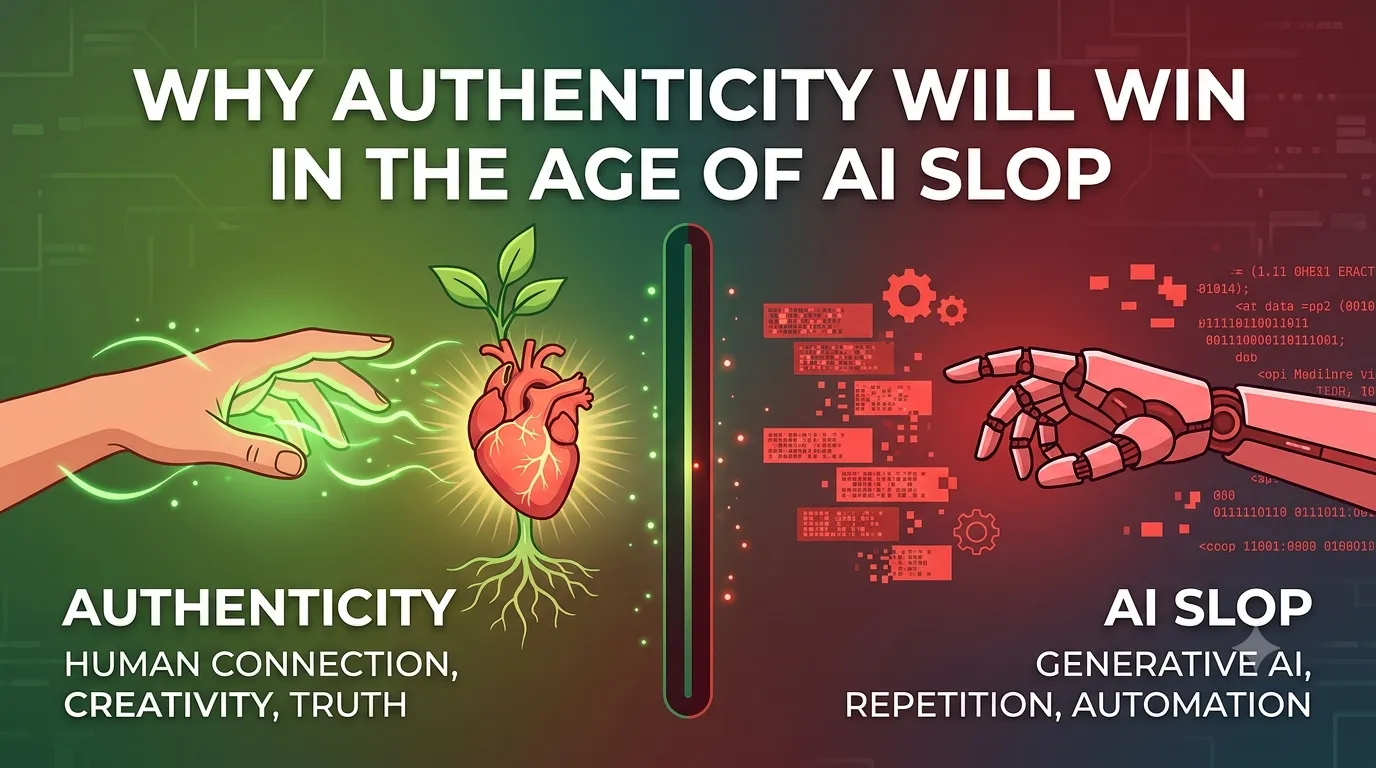
If you're like most people in 2026, the answer is: "All the time." The internet is drowning in AI-generated content. Generic blog posts. Hollow social media captions. Articles that sound correct but say nothing. It's everywhere. And it's eroding trust.
Here's the reality: Trust is the most valuable currency in marketing. And in the age of AI slop, it's becoming increasingly rare. The brands that build trust through ethical AI use will win. Those that don't will be forgotten.
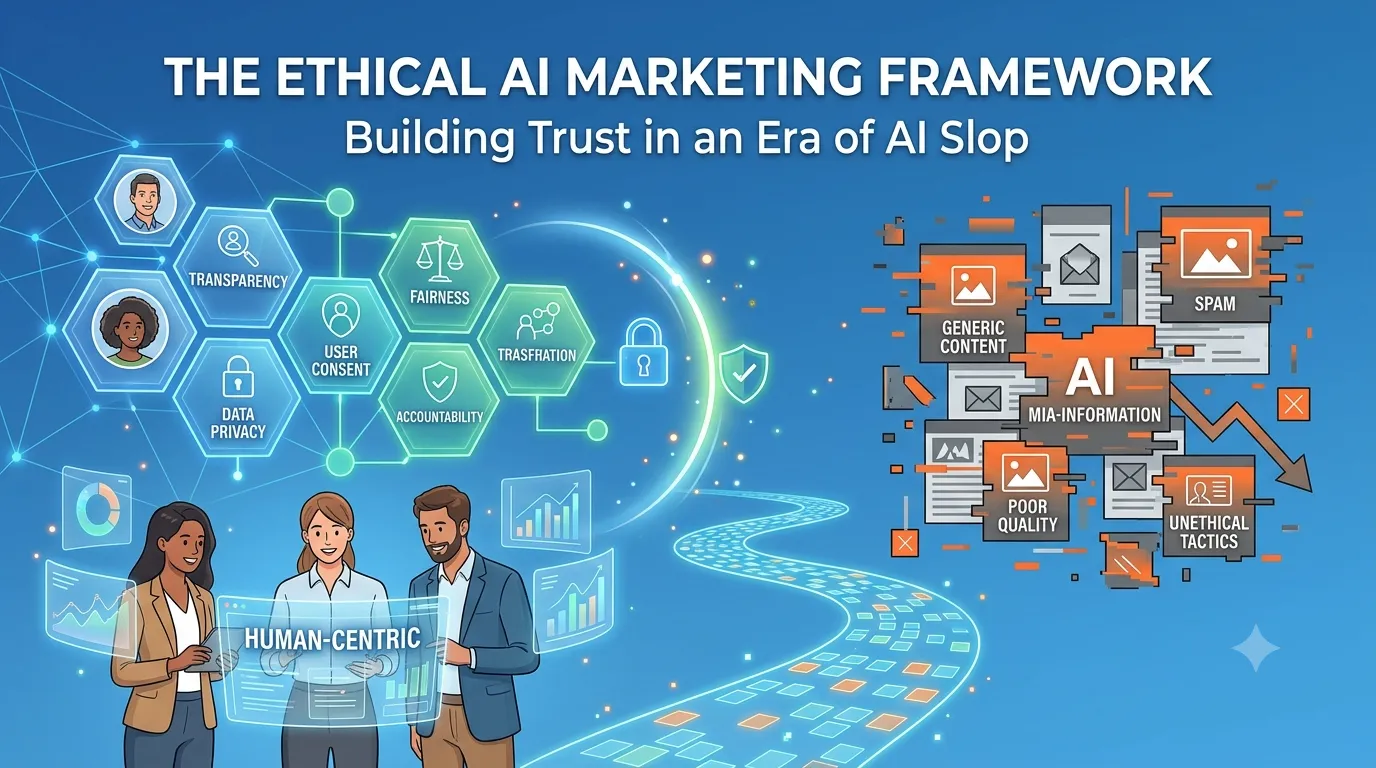
In this guide, I'll show you the Ethical AI Marketing Framework—a practical approach to using AI tools while building trust with your audience. Whether you're a digital marketing professional, a business owner, or a student taking a digital marketing course, this is your roadmap to responsible AI marketing.
Let's dive in.
1. The Trust Crisis in the Age of AI Slop
Let's start with the problem. AI slop is destroying trust.
1.1 What Is AI Slop?
- Generic, low-quality AI-generated content
- Content created with minimal human oversight
- Repetitive, shallow, and lacking in genuine insight
- Designed to fill space, not provide value
1.2 Why Trust Is Declining
- Consumers are becoming skeptical of AI-generated content
- They sense when content feels hollow or generic
- They're turning away from brands that don't feel authentic
- Trust is harder to earn and easier to lose than ever
2. The Ethical AI Marketing Framework
Here's the framework that helps you use AI responsibly while building trust.
2.1 The Four Pillars of Ethical AI Marketing
- Transparency: Be open about your use of AI
- Authenticity: Add genuine human value to AI outputs
- Accountability: Take responsibility for what you publish
- Privacy: Protect your customers' data
3. Pillar 1: Transparency
Transparency is the foundation of trust. If you use AI, be open about it.
3.1 What Transparency Looks Like
- Disclose when content is AI-generated
- Explain how you use AI in your process
- Be honest about AI's role in your business
- Don't hide AI use behind vague language
3.2 How to Practice Transparency
- Add a note: "This content was drafted with AI and reviewed by humans"
- Include an AI disclaimer on your website
- Be open about your AI tools and processes
- Explain how AI helps you serve customers better

4. Pillar 2: Authenticity
AI can generate content, but only you can provide authenticity. Your unique voice, experience, and perspective are what make content valuable.
4.1 What Authenticity Looks Like
- Content that reflects your genuine voice and personality
- Real experiences, stories, and insights
- Content that doesn't sound like everyone else's
- Honest, transparent communication
4.2 How to Practice Authenticity
- Always start with your own ideas, not AI prompts
- Use AI for drafting, but add your personal touch
- Share real experiences, failures, and lessons
- Be vulnerable and relatable
5. Pillar 3: Accountability
You are responsible for everything you publish—whether you used AI or not. Take that responsibility seriously.
5.1 What Accountability Looks Like
- Verifying all AI-generated information before publishing
- Correcting mistakes promptly and publicly
- Taking responsibility for your content's impact
- Being accountable to your audience
5.2 How to Practice Accountability
- Fact-check all AI-generated content
- Create a content review process
- Apologize and correct errors when they happen
- Protect your customers' data and privacy
6. Pillar 4: Privacy
Using AI tools responsibly means protecting your customers' data. Don't sacrifice privacy for convenience.
6.1 What Privacy Looks Like
- Not inputting sensitive customer data into AI tools
- Using enterprise-grade AI tools with privacy protections
- Being transparent about data usage
- Complying with data protection regulations
6.2 How to Practice Privacy
- Review your AI tools' privacy policies
- Use tools with strong security and privacy features
- Don't input confidential business information
- Be transparent about data collection and use
7. Practical Application: The Ethical AI Workflow
Here's how to apply the framework in your daily work.
Step 1: Start with Your Ideas
Begin every project with your own thinking. What do you want to say? What's your unique perspective? AI supports you—you lead.
Step 2: Use AI as a Drafting Tool
Use AI to draft, organize, and refine. But never publish without human review. AI is a starting point, not a finish line.
Step 3: Add Your Voice
Add your personality, stories, and insights. This is what makes content authentic and valuable. AI can't replicate you.
Step 4: Review and Verify
Fact-check everything. Ensure accuracy and relevance. Take responsibility for the final output.
Step 5: Be Transparent
If you used AI, disclose it. Be open about your process. This builds trust.
8. Real-World Examples of Ethical AI Marketing
Here's how brands are using the framework effectively.
8.1 The Digital Marketing Course Provider
A digital marketing course provider uses AI to draft content but always adds real-world examples and personal insights. They disclose their use of AI and invite feedback. Their audience trusts them because they're transparent and authentic.
8.2 The B2B SaaS Company
A B2B SaaS company uses AI for customer support and content creation. They're transparent about AI's role and ensure human oversight. Their customers trust them because they're honest about what AI can and can't do.
9. Conclusion: Trust Is the New Currency
In an era of AI slop, trust is more valuable than ever. The brands that use AI ethically—transparently, authentically, accountably, and with privacy—will build lasting trust with their audiences. Those that don't will be forgotten.
But here's the good news: You already have what it takes to build trust. You have a unique voice, real experiences, and genuine insights. Use AI to amplify your humanity, not replace it.
The choice is yours. Keep creating generic AI content that erodes trust, or start building a brand that people genuinely trust.
Join the best Digital Marketing Course to master ethical AI marketing and digital strategy in 2026.
Frequently Asked Questions (5 Unique FAQs)
❓ 1. Do I have to disclose every time I use AI?
It depends on your audience and context. At minimum, be transparent about your overall use of AI. For specific pieces of content, consider adding a note if AI played a significant role. Transparency builds trust.
❓ 2. Can AI-generated content be authentic?
AI-generated content alone isn't authentic. But AI-assisted content—where AI helps you structure, research, or draft—can be authentic if you add your voice, experiences, and insights. Authenticity comes from the human, not the tool.
❓ 3. How do I balance AI efficiency with authenticity?
Use AI for drafting, research, and optimization—the repetitive tasks. Keep the creative, emotional, and personal elements for yourself. Let AI handle the "what"; you handle the "why" and "how it feels."
❓ 4. What are the risks of not being transparent about AI?
Loss of trust. When audiences discover you've been hiding AI use, they'll question everything you do. Transparency prevents this. It also sets you apart from brands that try to hide their AI use.
❓ 5. Can ethical AI marketing be scaled?
Yes. The framework is designed for scale. You can create systems and workflows that ensure transparency, authenticity, accountability, and privacy at scale. The key is to design your processes with ethics in mind from the start.