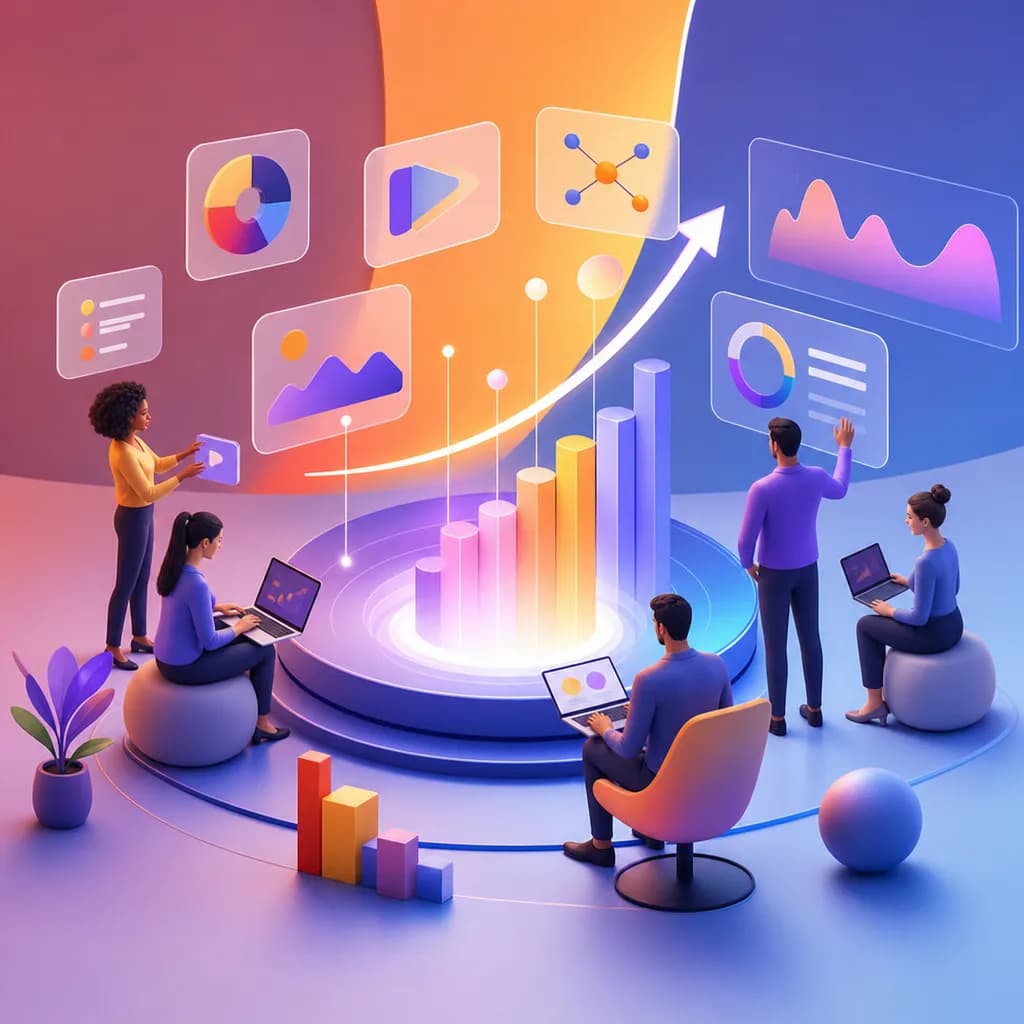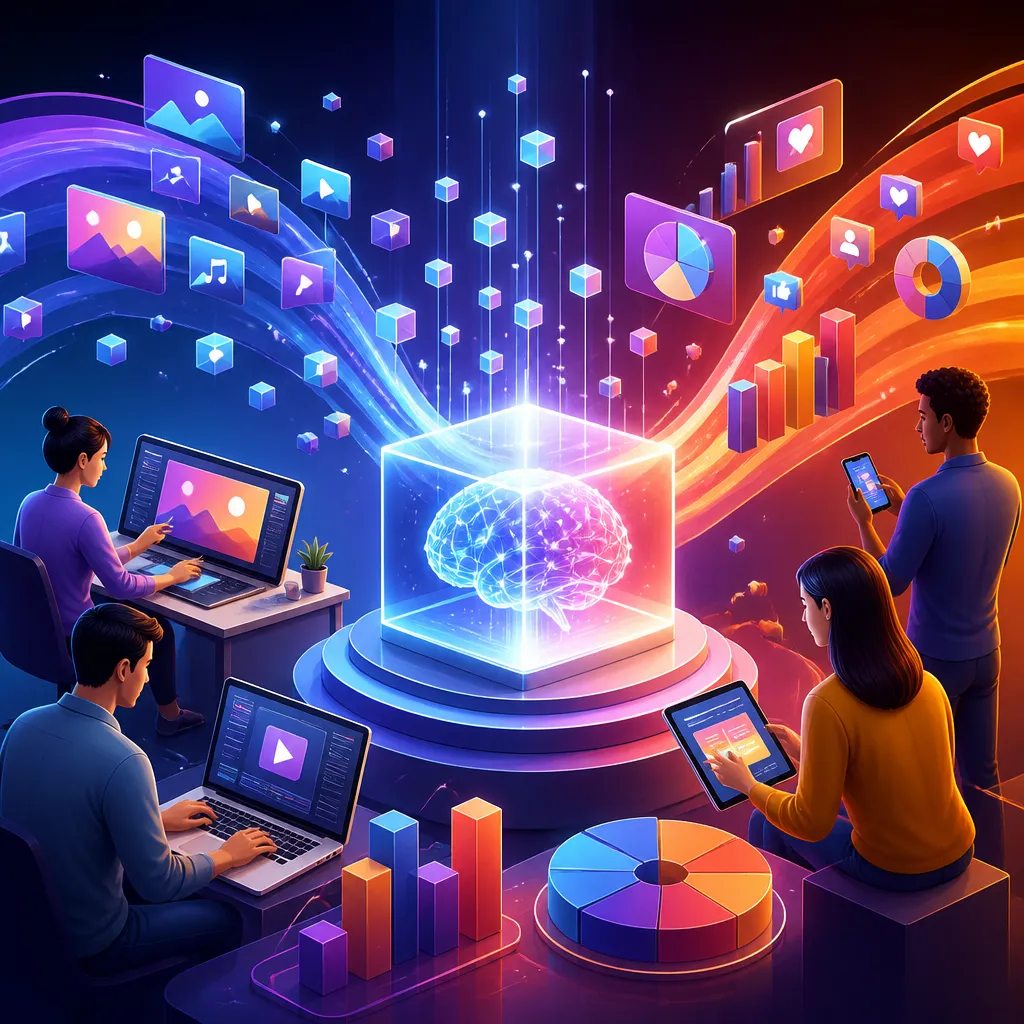
In today's fast-paced digital landscape, AI is not just a tool; it's a transformational force reshaping how marketing teams operate. No longer confined to campaign-based execution, AI is paving the way for a new era of continuous growth and optimization. Let's explore how you can harness AI to create a robust content ecosystem that empowers your marketing efforts.
Key Takeaways
- Shift to Continuous Growth: AI is driving a move away from traditional marketing campaigns towards a model that emphasizes ongoing improvement and adaptability.
- Strategic Integration is Key: Simply producing more content with AI won't guarantee better results. A cohesive strategy connecting creation, distribution, and measurement is crucial.
- Human Insight Matters: As AI scales content production, human expertise, original insights, and a deep understanding of your audience remain invaluable.
- Optimize with AI Workflows: Building AI-enabled workflows that support your content strategy can significantly enhance efficiency and effectiveness.
- Importance of Trustworthy Content: With evolving search behaviors, structured, adaptable, and credible content is essential for long-term visibility.
- Competitive Advantage Through Learning: Establishing repeatable content operations that learn from audience behavior will set your brand apart.

As AI transforms the marketing landscape, it becomes clear that the challenge is not just about adopting this technology, but also about redesigning your processes to leverage its full potential. According to McKinsey's research, organizations are moving towards integrated marketing models powered by AI, focusing on capabilities such as hyperpersonalization and scaled creativity.
AI Is Redefining Marketing Operations
The traditional marketing model, characterized by isolated campaigns with defined timelines, is rapidly becoming outdated. AI facilitates a more dynamic approach, allowing teams to monitor audience signals in real-time, adapt content accordingly, and utilize performance data to inform future strategies.

McKinsey identifies five core capabilities that are essential for an AI-first marketing approach: continuous insights, scaled creativity, hyperpersonalization, marketing to AI agents, and always-on orchestration. These elements work in concert, creating a seamless ecosystem that enhances the effectiveness of marketing efforts.
Why More Content Isn't Always the Answer
It's tempting to view AI purely as a content generation tool, generating output at an unprecedented scale. However, without a strategic framework, this can lead to a flood of content that lacks direction and impact. AI should not merely be about quantity; it should enhance the quality and relevance of your marketing.
Instead of focusing on churning out a high volume of articles or posts, brands should aim to create content that addresses genuine questions, showcases expertise, and aligns with measurable business outcomes. This approach ensures that your content is not just noise, but valuable information that resonates with your audience.
Building an AI-Powered Content System
To truly capitalize on the benefits of AI, organizations must establish a structured content system. This system should begin with a foundation of human expertise and original insights. Leverage your in-house knowledge, proprietary data, and unique experiences to create content that stands out.

As you develop your content system, consider the following steps:
- Audit Your Existing Workflow: Examine how content moves from ideation to publication. Identify bottlenecks, repetitive tasks, and areas lacking clarity.
- Identify AI Opportunities: Prioritize areas where AI can enhance speed and efficiency without sacrificing quality or oversight.
- Create a Continuous Optimization Loop: Connect your content output back to performance data, fostering a cycle of learning and improvement.
The Competitive Edge Lies in the System
As AI tools become more widely available, the real competitive advantage will come from how effectively you integrate these tools into a cohesive system that combines technology with human judgment. Rather than viewing AI as merely a scaling solution, leverage it to refine your processes and enhance the value of your content.
The focus should be on creating a marketing operation that evolves and improves over time, reinforcing the importance of human strategy, expertise, and accountability at every stage.
Conclusion
AI is not just about speeding up content production; it’s about transforming how marketing teams create, distribute, and optimize content. By building a strategic AI-powered content system, brands can adapt to changing audience behaviors and drive meaningful engagement.
If you're ready to take your content strategy to the next level, explore our Digital Marketing Course to gain valuable insights on integrating AI into your marketing operations effectively. Remember, the journey to a smarter content ecosystem starts with one step.