Let me ask you something. When was the last time you had a truly great customer service experience? One where your issue was resolved quickly, the interaction was personalized, and you felt genuinely valued?
If you're like most people in 2026, the answer is: "Rarely." Customer service is still broken for most brands. Long wait times. Repetitive questions. Generic responses. Frustration. And the worst part? Customers remember bad service more than they remember good products.
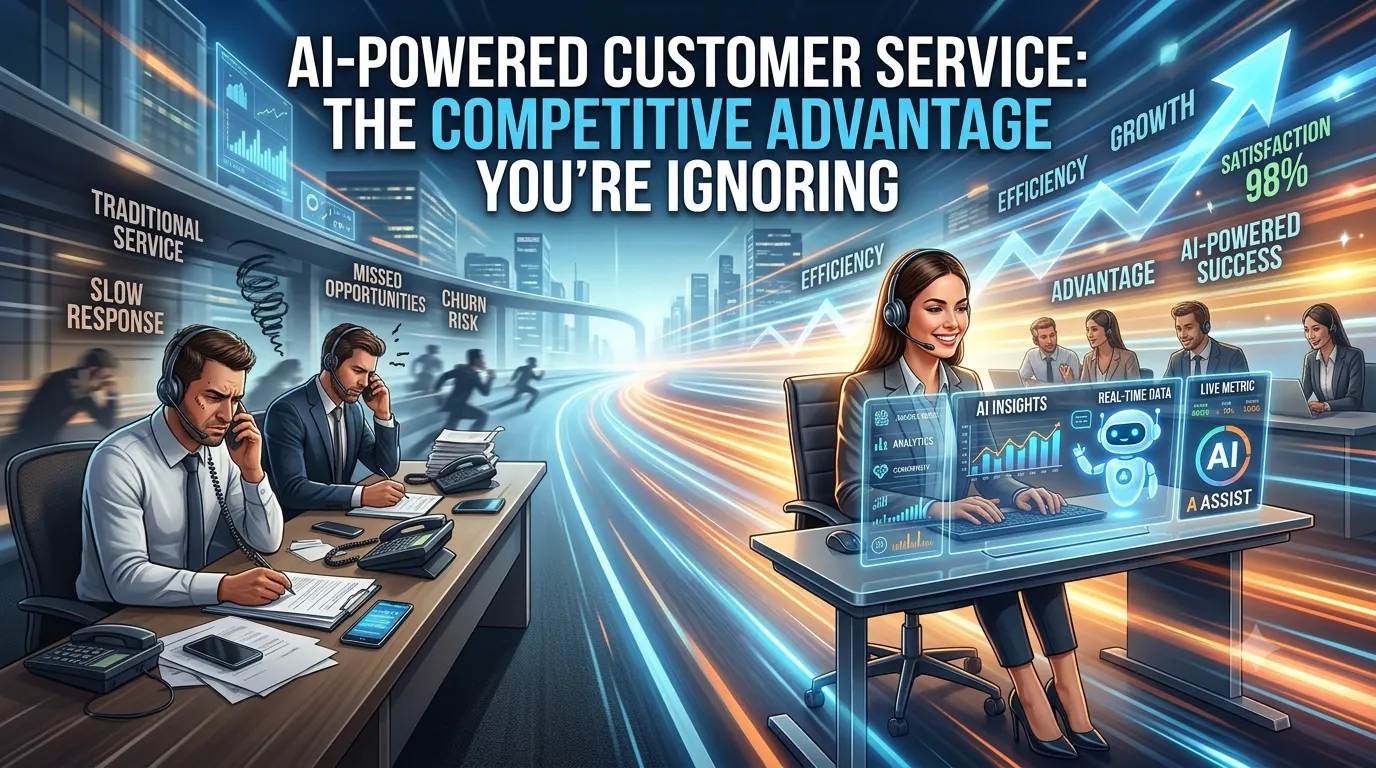
Here's the opportunity: AI is transforming customer service. It's making it faster, more personalized, and more effective than ever before. And the brands that adopt it are gaining a massive competitive advantage.
In this guide, I'll show you exactly how AI-powered customer service can become your competitive advantage. Whether you're a digital marketing professional, a business owner, or a student taking a digital marketing course, this is your blueprint for winning with AI customer service.
Let's dive in.
1. Why Customer Service Is the New Marketing
Here's the reality: Customer service is the new marketing. A positive service experience builds loyalty, generates referrals, and increases lifetime value. A negative one destroys trust and drives customers away.
1.1 The Experience Economy
Customers no longer buy products—they buy experiences. They expect to feel valued, understood, and appreciated. Customer service is the primary way brands deliver on these expectations.
1.2 The Trust Factor
Trust is the foundation of customer relationships. And trust is built—or destroyed—through service interactions. A positive service experience builds trust. A negative one destroys it.
1.3 The Retention Factor
It's far cheaper to retain a customer than to acquire a new one. Customer service is the primary driver of retention. The better your service, the longer customers stay.
2. What AI-Powered Customer Service Looks Like
AI-powered customer service isn't just chatbots. It's a complete transformation of how you support customers.
2.1 Intelligent Chatbots
Chatbots are the first line of defense. They handle routine inquiries instantly, 24/7. They answer FAQs, resolve simple issues, and escalate complex ones to humans.
2.2 AI-Powered Email Support
AI drafts responses, categorizes tickets, and prioritizes urgent issues. It helps support teams respond faster and more consistently.
2.3 AI-Assisted Human Agents
AI doesn't replace humans—it augments them. It provides agents with real-time insights, suggested responses, and customer history. This makes agents more effective.
2.4 Predictive Support
AI predicts issues before they happen. It identifies customers who are likely to have problems and reaches out proactively. This prevents dissatisfaction.
2.5 Personalization at Scale
AI personalizes every interaction. It knows the customer's history, preferences, and context. Every interaction feels tailored to the individual.
3. The Benefits of AI-Powered Customer Service
Here's why AI-powered customer service is a competitive advantage.
3.1 Speed
AI handles inquiries instantly—24/7/365. No wait times. No business hours. Customers get answers when they need them.
3.2 Consistency
AI provides consistent responses every time. No variation in quality or tone. Every customer gets the same great experience.
3.3 Scalability
AI scales effortlessly. Whether you have 100 customers or 100,000, AI handles the volume. No need to hire and train new agents.
3.4 Cost Efficiency
AI reduces costs significantly. It automates routine inquiries, freeing human agents for complex issues. This reduces operational costs.
3.5 Insights
AI generates insights from customer interactions. It identifies issues, trends, and opportunities. This data drives better decisions.
4. How to Implement AI-Powered Customer Service
Here's a step-by-step process for implementing AI-powered customer service.
Step 1: Identify Your Pain Points
Start by understanding your current customer service challenges. Long response times? High volume of simple inquiries? Inconsistent quality? Identify your pain points.
Step 2: Choose the Right AI Tools
Select AI tools that address your pain points. Chatbots for volume. Email automation for consistency. AI-assist for agents. Predictive analytics for proactive support.
Step 3: Start Small
Don't try to transform everything at once. Start with one channel or one use case. A chatbot for FAQs. AI-assisted email responses. Learn and expand.
Step 4: Train Your Team
AI tools are only as good as the people using them. Train your team to use AI effectively. Show them how AI augments their capabilities.
Step 5: Monitor and Optimize
Monitor performance. Track metrics like response time, resolution rate, and customer satisfaction. Continuously optimize based on data.
5. The Human + AI Model
The most effective customer service model combines AI and human agents. Here's how it works.
5.1 AI Handles the Routine
AI handles routine inquiries—FAQs, password resets, order tracking. It resolves these issues instantly, without human intervention.
5.2 AI Escalates Complex Issues to Humans
When an inquiry is complex, AI escalates to a human agent. It provides the agent with context, history, and suggested responses.
5.3 AI Assists Human Agents
AI assists human agents in real-time. It suggests responses, provides insights, and surfaces relevant information. This makes agents more effective.
5.4 Humans Handle the Emotional
Humans handle emotionally complex interactions—sensitive complaints, nuanced questions, relationship-building. AI can't replicate human empathy.
6. Real-World Examples of AI Customer Service Success
6.1 The Digital Marketing Course Provider
A digital marketing course provider implemented AI chatbots to handle routine student inquiries. Enrollment questions, course details, and technical support were automated. Human agents handled complex student issues and coaching. Response times dropped from 24 hours to 2 minutes. Student satisfaction increased by 80%.
6.2 The Ecommerce Brand
An ecommerce brand used AI to personalize customer support. Chatbots recognized returning customers, understood their history, and provided tailored recommendations. Human agents had full context when they took over. Support costs dropped by 40% while customer satisfaction increased.
7. The Competitive Advantage
Here's why AI-powered customer service is a competitive advantage you can't ignore.
- Customers demand speed: If you're not fast, they'll go to a competitor who is.
- Customers demand personalization: If you're not personalized, they'll go to a competitor who is.
- Customers demand consistency: If you're not consistent, they'll go to a competitor who is.
- AI makes all of this possible: AI gives you the speed, personalization, and consistency customers expect.
8. Conclusion: Start Winning with AI Customer Service
Customer service is the new marketing. In 2026, the brands that win are the ones that deliver exceptional service—fast, personalized, and consistent. AI makes this possible at scale.
But here's the good news: It's not too late to start. You don't need to transform everything overnight. Start small. Choose one channel. Implement one AI tool. Learn, iterate, and expand.
The choice is yours. Keep doing customer service the old way, or start building a competitive advantage with AI.
Join the best Digital Marketing Course to master AI-powered customer service and digital strategy in 2026.
Frequently Asked Questions (5 Unique FAQs)
❓ 1. Will AI replace human customer service agents?
No. AI will augment human agents, not replace them. AI handles routine inquiries, allowing humans to focus on complex issues and emotional interactions. The human + AI model is more effective than either alone.
❓ 2. Can AI truly understand customer emotions?
AI can detect sentiment and analyze language patterns. But it can't truly understand or replicate human empathy. That's why emotional interactions should be handled by human agents.
❓ 3. How much does AI-powered customer service cost?
It depends on the scale and complexity. Chatbots can be implemented for a few hundred dollars per month. More sophisticated solutions can cost thousands. But the ROI is significant—reduced costs, increased retention, and higher lifetime value.
❓ 4. What's the biggest challenge with AI customer service?
Getting the training data right. AI learns from data. If your data is incomplete or biased, your AI will perform poorly. Start with clean, comprehensive data.
❓ 5. How do I measure AI customer service success?
Track metrics like response time, resolution rate, customer satisfaction, and cost per interaction. Compare these metrics before and after AI implementation. The improvement is the ROI.