Let me ask you something. How many videos have you created in the last year? And more importantly—do you actually know which ones are working?
If you're like most digital marketing professionals, the answer is: "I have views and engagement numbers, but I don't really know what's driving results." You're posting videos, but you're guessing about performance. And that's costing you.
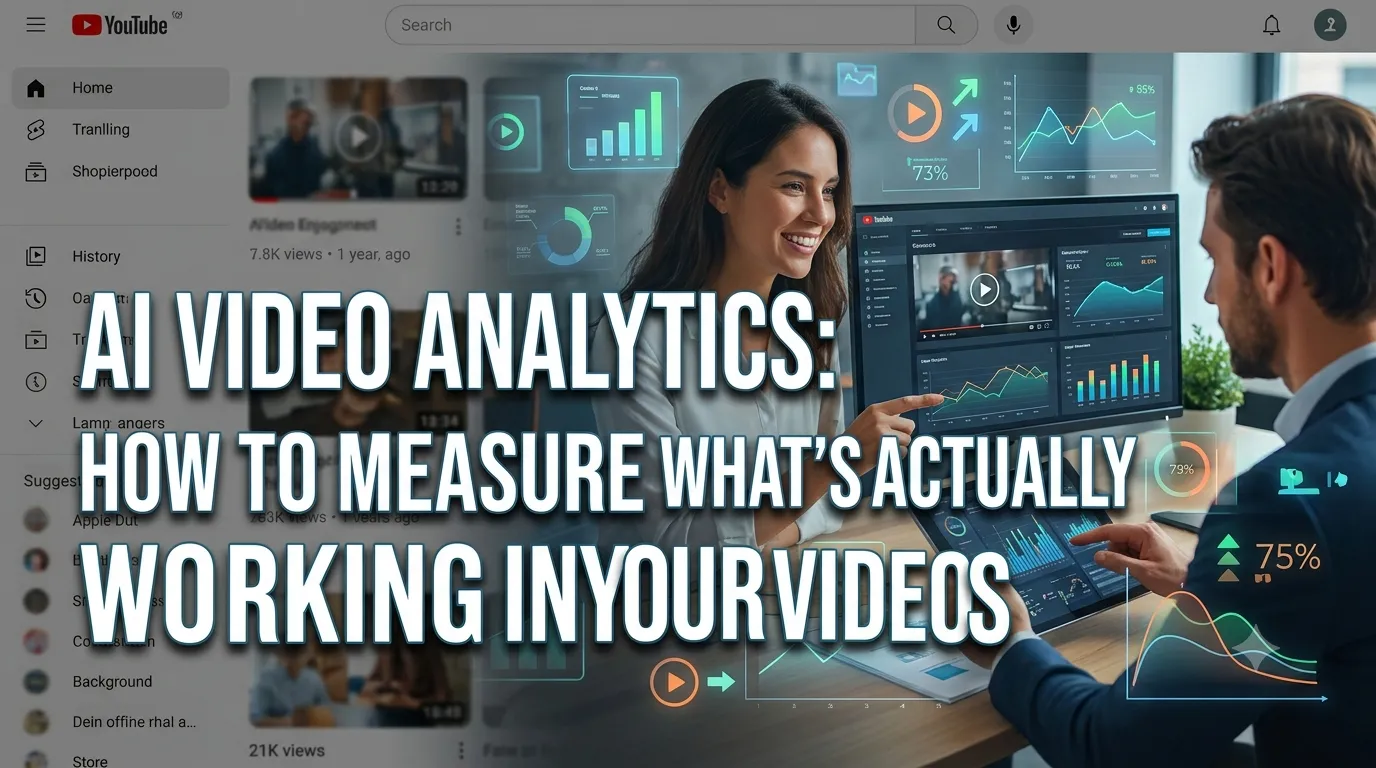
Here's the good news: AI video analytics can tell you exactly what's working and why. In this guide, I'll show you how AI video analytics can transform your video marketing strategy. Whether you're a digital marketing professional, a content creator, or a student taking a digital marketing course, this is your blueprint for data-driven video success.
Let's dive in.
1. Why Video Analytics Matter More Than Views
Views are vanity. Engagement is valuable. But understanding why people watch—or don't watch—is everything.
1.1 The View Trap
You've seen it before: a video with millions of views but no sales. Views don't pay bills. Engagement doesn't equal conversions. What matters is understanding what drives action.
1.2 What Traditional Analytics Miss
- Why people drop off at specific points
- Which moments drive the most engagement
- What makes people share or save
- How video performance correlates with conversions
1.3 What AI Analytics Reveal
- Attention patterns and drop-off points
- Emotional engagement and sentiment
- Content effectiveness by segment
- Predictive performance insights
2. What AI Video Analytics Can Measure
AI video analytics goes far beyond basic metrics. Here's what it can measure.
2.1 Attention Metrics
- Average watch time: How long people actually watch
- Drop-off points: Exactly where viewers stop watching
- Re-watch moments: Which sections people watch again
- Attention heatmaps: Visual representation of viewer focus
2.2 Engagement Metrics
- Emotional response: AI detects viewer sentiment in real-time
- Share and save rates: Which videos get saved or shared
- Comment sentiment: Positive, negative, or neutral reactions
- Click-through rates: When viewers take action
2.3 Performance Metrics
- Conversion attribution: Which videos drive sales or leads
- Audience retention: How well your content holds attention
- Content effectiveness: Which formats, topics, and styles perform best
- Predictive performance: AI predicts how content will perform before publishing
3. The Best AI Video Analytics Tools
Here are the top AI tools for video analytics.
3.1 YouTube Analytics with AI Insights
YouTube's built-in analytics now includes AI-powered insights. It tells you:
- Audience retention heatmaps
- Top moments that drive engagement
- Suggested video performance predictions

3.2 Wistia AI Analytics
Wistia provides detailed video analytics with AI-driven insights:
- Heatmaps showing where viewers watch
- Engagement scores for each video
- Conversion attribution and tracking
3.3 Vidyard AI Analytics
Vidyard offers AI-powered video analytics for businesses:
- Individual viewer engagement tracking
- Predictive analytics for video performance
- Integration with CRM and marketing tools
3.4 Smartly.io AI Video Analytics
Smartly.io provides AI-driven video ad analytics:
- Creative performance analysis
- Audience segmentation insights
- Predictive ad optimization
4. How to Use AI Video Analytics to Improve Your Content
Here's how to turn analytics into action.
4.1 Identify Drop-off Points
- Find where viewers are leaving
- Analyze why they're leaving
- Fix those sections or shorten your content
4.2 Double Down on What Works
- Identify your best-performing content
- Analyze what makes it effective
- Create more content in that style or format
4.3 Optimize Video Length
- Compare engagement at different lengths
- Find the sweet spot for your audience
- Create content that matches viewer attention
4.4 Improve Thumbnails and Titles
- Analyze which thumbnails and titles get clicks
- Identify what makes them work
- Apply winning formulas to future content
5. Real-World Example: The AI Analytics Transformation
Here's how a digital marketing team used AI video analytics to transform their video strategy:
- Challenge: They were creating videos weekly but saw inconsistent engagement.
- Solution: They used AI video analytics to identify drop-off points and engagement patterns.
- Result: They shortened videos, improved thumbnails, and doubled their engagement rates. Conversions from video increased by 150%.
6. Conclusion: Measure What Matters
Views don't pay the bills. Engagement doesn't equal sales. Understanding what drives results is the only thing that matters. AI video analytics gives you that understanding—insights into what works, why it works, and how to do more of it.
But here's the good news: You can start today. Use one AI analytics tool, analyze your best videos, and apply the insights. Small changes can lead to big improvements.
The choice is yours. Keep guessing about your video performance, or start measuring what matters.
Join the best Digital Marketing Course to master AI-powered content creation and digital marketing in 2026.
Frequently Asked Questions (5 Unique FAQs)
❓ 1. What's the most important video metric to track?
Audience retention—how long people actually watch. If they're not watching, nothing else matters. Retention tells you if your content is engaging enough to hold attention.
❓ 2. Can AI predict video performance before publishing?
Yes. AI tools can analyze your video content and predict engagement, retention, and conversion potential. This helps you optimize before you publish.
❓ 3. Are AI video analytics expensive?
Many platforms include AI analytics for free (YouTube, Instagram). Paid tools like Wistia and Vidyard offer more advanced features for a subscription fee.
❓ 4. How often should I review video analytics?
Review analytics weekly for active campaigns and monthly for overall strategy. Real-time monitoring helps you catch trends early.
❓ 5. What's the biggest mistake people make with video analytics?
Looking at vanity metrics (views, likes) instead of actionable metrics (retention, engagement, conversion). If you're only tracking views, you're not learning what drives results.