Let me ask you something. How many social media platforms are you currently posting on? How many hours do you spend creating content for LinkedIn, Instagram, Facebook, Twitter, TikTok, YouTube, and who knows where else? And most importantly — is it actually working?
If you're like most business owners and marketers, the answer is probably: "I'm everywhere, and I'm exhausted." You're spreading yourself thin across every channel, hoping something will stick. But here's the uncomfortable truth: being everywhere is a terrible strategy.
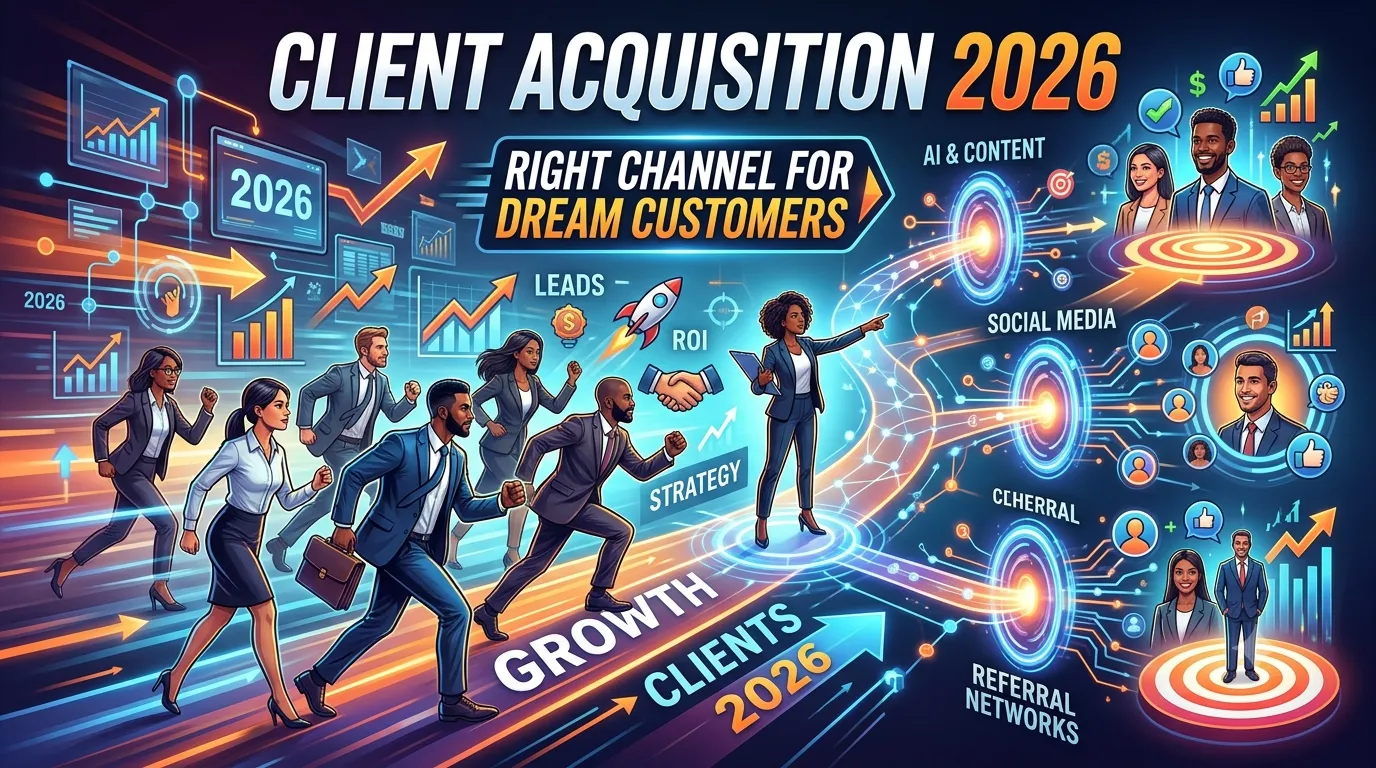
In 2026, the path to attracting your dream customers isn't about being on every platform. It's about being on the right platform — the one where your ideal clients actually spend their time, engage with content, and make buying decisions.
In this guide, I'll show you exactly how to identify the right channel for your business, build a focused client acquisition strategy, and stop wasting time on platforms that will never deliver results. Whether you're a digital marketing professional, a business owner, or a student taking a digital marketing course, this framework will transform your approach to client acquisition.
1. The Myth of Omnipresence: Why "Being Everywhere" Fails
Let's be honest. The advice to "be everywhere" sounds smart. More visibility, more reach, more opportunities. But here's what actually happens when you try to be everywhere:
- You post inconsistently because you're stretched thin
- Your content quality drops because you're rushing
- You attract the wrong audience because your messaging is generic
- You burnout and give up entirely
The businesses that win in 2026 don't try to be everywhere. They choose one or two channels and dominate them. They become the go-to voice on that platform. They build authority, trust, and recognition.
As one marketing strategist put it: "It's better to be deeply present on one platform than superficially present on five."
2. Step 1: Define Your Ideal Client Avatar
Before you can choose the right channel, you need to know who you're trying to reach. This is the most important step — and the one most people skip.
2.1 Demographics
Start with the basics. Age, location, income level, education, job title, industry. These are the surface-level characteristics that help you understand who your client is.
2.2 Psychographics
Go deeper. What are their values, beliefs, interests, and lifestyle? What motivates them? What frustrates them? What are their goals and aspirations?
2.3 Pain Points and Challenges
What keeps your ideal client up at night? What problems are they trying to solve? What would they do if they had the perfect solution? Understanding their pain points is essential for crafting messaging that resonates.
2.4 Where Do They Spend Time?
This is the critical question. Where does your ideal client go for information? Which platforms do they use? What kind of content do they consume? Where do they go when they're ready to make a purchase decision?
3. Step 2: Understand Your Client's Journey
Different channels work at different stages of the client journey. Understanding this is key to choosing the right platform for your goals.
3.1 Awareness Stage
At this stage, your client is discovering they have a problem. They're looking for information, education, and answers. Channels that work well here include:
- YouTube (educational content)
- SEO/blogging (informational content)
- Social media (discovery and inspiration)
- Podcasts (learning on the go)
3.2 Consideration Stage
Your client knows they have a problem and is evaluating solutions. They're comparing options, looking at case studies, and seeking validation. Channels that work well here include:
- LinkedIn (professional credibility)
- Webinars (in-depth education)
- Email marketing (nurturing sequences)
- Case studies and testimonials on your website
3.3 Decision Stage
Your client is ready to buy. They need the final push — trust, urgency, and a clear path to purchase. Channels that work well here include:
- Direct outreach (personalized communication)
- Consultation calls (direct sales)
- Retargeting ads (reminding them of your offer)
- Email sequences with a strong call to action
4. The Major Channels: What Works and When
Let's look at the major client acquisition channels available in 2026 and understand when each one is the right choice.
4.1 LinkedIn – Best for B2B and Professional Services
Why it works: LinkedIn is the platform for professionals. Decision-makers, business owners, and professionals are active here. It's designed for business networking and thought leadership.
Best for: B2B services, consultants, coaches, agencies, recruiters, SaaS companies.
Content that works: Thought leadership articles, case studies, industry insights, personal stories, professional achievements, and engagement on others' posts.
How to win: Post consistently (3-5 times per week). Engage with others' content. Build a network of your ideal clients. Use LinkedIn Sales Navigator for targeted outreach.
4.2 Instagram – Best for Visual Brands and B2C
Why it works: Instagram is visual. It's where brands build emotional connections through imagery, video, and storytelling. It's also where younger demographics spend their time.
Best for: Fashion, beauty, lifestyle, food, travel, fitness, ecommerce, and brands with strong visual identity.
Content that works: High-quality images, Reels, Stories, behind-the-scenes content, user-generated content, tutorials, and aesthetic feeds.
How to win: Post daily if possible. Use Reels for reach. Engage with your audience in DMs and comments. Use Instagram Shopping if you sell products.
4.3 Facebook – Best for Community and Targeting
Why it works: Facebook has incredible targeting capabilities. You can reach almost any demographic. It's also where communities thrive — groups are particularly powerful.
Best for: Local businesses, communities, groups, older demographics, and businesses with strong targeting needs.
Content that works: Group discussions, live videos, community engagement, event promotion, and ads.
How to win: Build a Facebook group around your niche. Engage actively. Use Facebook Ads for precise targeting.
4.4 YouTube – Best for Education and Authority
Why it works: YouTube is the second-largest search engine. People go there to learn, solve problems, and make decisions. It builds trust and authority like no other platform.
Best for: Educational content, tutorials, product reviews, thought leadership, and brands that can create video content consistently.
Content that works: Tutorials, how-to videos, case studies, product demos, behind-the-scenes, and long-form educational content.
How to win: Post weekly. Create evergreen content that continues to rank. Optimize for search. Build a library of valuable content.
4.5 TikTok – Best for Brand Awareness and Viral Reach
Why it works: TikTok's algorithm is unparalleled for discovery. It can put your content in front of millions of people who don't follow you. It's where trends are born.
Best for: Brands targeting younger demographics (Gen Z and younger Millennials), B2C products, and businesses that can create engaging short-form content.
Content that works: Trending challenges, authentic behind-the-scenes, educational clips, entertaining videos, and user-generated content.
How to win: Post multiple times daily. Use trending sounds and hashtags. Be authentic and don't overproduce.
4.6 Email Marketing – Best for Nurturing and Retention
Why it works: Email is direct, personal, and owned by you. You don't rely on algorithms. It's the highest ROI channel when done right.
Best for: Nurturing leads, building relationships, converting warm prospects, and retaining existing clients.
Content that works: Newsletters, educational sequences, promotional emails, case studies, and personalized offers.
How to win: Build your list consistently. Segment based on behavior. Personalize your messaging. Test and optimize.
4.7 SEO and Blogging – Best for Inbound Lead Generation
Why it works: People are actively searching for solutions to their problems. If you have content that answers their questions, they'll find you.
Best for: Businesses that want consistent, inbound leads without constant promotion.
Content that works: Blog posts, guides, resources, case studies, and landing pages optimized for search.
How to win: Create content that addresses your ideal client's pain points. Optimize for SEO. Build backlinks. Be patient — SEO is a long game.
4.8 Podcasting – Best for Authority and Relationship Building
Why it works: Podcasts build deep connections. Listeners feel like they know you. It's an intimacy that other channels can't match.
Best for: Thought leaders, coaches, consultants, and brands that want to build authority and relationships.
Content that works: Interviews, solo episodes, deep dives on specific topics, and storytelling.
How to win: Be consistent. Get great guests. Repurpose episodes across other channels.
4.9 Webinars and Live Events – Best for High-Ticket Sales
Why it works: Live interaction builds trust and urgency. It allows you to educate, address objections, and close high-ticket sales.
Best for: High-ticket services, courses, coaching, and products that require education before purchase.
Content that works: Educational presentations, Q&A sessions, case studies, and live offers.
How to win: Promote your webinar heavily. Provide massive value. Address objections. Make a clear offer. Follow up with attendees.
4.10 Direct Outreach (Cold Email/DM) – Best for Targeted Prospecting
Why it works: Direct outreach puts you in front of specific people you want to work with. It's targeted, personal, and can be highly effective when done right.
Best for: B2B businesses, high-ticket services, and businesses with a clear ideal client profile.
Content that works: Personalized messages that show you've done your research. Offer value before asking for anything.
How to win: Personalize every outreach. Provide value first. Follow up. Be respectful and persistent.
5. The Channel Selection Framework
Now that you understand the channels, here's a framework to choose the right one for your business.
5.1 Where Does Your Client Spend Time?
This is the most important question. Don't guess — research. Ask your existing clients. Look at industry reports. Spend time on the platforms yourself.
5.2 Where Do Your Competitors Win?
Analyze your competitors. Which channels are they active on? Where are they getting engagement? Where do they seem to be winning? You don't need to copy them, but you should understand the landscape.
5.3 What Are You Good At?
Be honest with yourself. Are you a good writer? Video creator? Speaker? Choose channels that play to your strengths. If you hate making videos, YouTube and TikTok will be a struggle.
5.4 The "One Channel First" Approach
Here's the strategy that works: Master one channel before adding another. Choose your primary channel. Commit to it for 6-12 months. Become the go-to voice on that platform. Once you've built momentum, expand to a second channel.
6. Real-World Examples
Let's look at how different businesses have successfully chosen the right channel.
6.1 Example 1: B2B SaaS Company
Company: A B2B SaaS company selling project management software.
Ideal Client: Operations managers and team leads in mid-sized companies.
Chosen Channel: LinkedIn + SEO.
Why: Their ideal clients are active on LinkedIn and search Google for solutions.
Result: Consistent inbound leads, predictable pipeline growth.
6.2 Example 2: Ecommerce Brand
Company: A sustainable fashion brand.
Ideal Client: Women aged 25-40 who care about sustainability and fashion.
Chosen Channel: Instagram + Email.
Why: Instagram is visual and where their audience spends time. Email converts followers into repeat customers.
Result: Strong community, high engagement, repeat purchases.
6.3 Example 3: Digital Marketing Course Creator
Company: A digital marketing course provider.
Ideal Client: Career-changers and professionals looking to upskill.
Chosen Channel: YouTube + Webinars.
Why: YouTube builds authority and attracts learners. Webinars convert high-ticket enrollments.
Result: High-ticket enrollments, strong brand authority.
7. How to Test and Measure Channel Performance
Once you've chosen your channel, you need to track performance and optimize.
7.1 Set Up Tracking
Use analytics tools for each platform. Set up conversion tracking so you know which leads and sales come from which channels.
7.2 Key Metrics to Watch
- Reach: How many people are seeing your content?
- Engagement: How many likes, comments, shares, saves?
- Leads: How many qualified leads are coming from this channel?
- Conversions: How many leads become clients?
- Cost: If you're spending money, what's your CAC (Customer Acquisition Cost)?
7.3 When to Pivot
Give each channel at least 3-6 months of consistent effort. If you're not seeing results after that, evaluate whether you should adjust your approach or choose a different channel.
8. The Biggest Mistakes People Make
Learn from others' mistakes so you don't make them yourself.
8.1 Mistake 1: Not Defining Their Ideal Client First
You can't choose a channel without knowing who you're talking to. This is the most common mistake. Define your client before you choose your platform.
8.2 Mistake 2: Chasing Vanity Metrics
Likes and followers don't pay bills. Focus on leads and conversions, not engagement metrics that don't impact your bottom line.
8.3 Mistake 3: Giving Up Too Soon
Channels take time to build. You won't see results in a week or a month. Commit to at least 3-6 months of consistent effort before evaluating.
8.4 Mistake 4: Neglecting Existing Clients
Your existing clients are your best source of new clients. Referrals convert at a much higher rate than cold leads. Don't neglect them in your pursuit of new business.
8.5 Mistake 5: Not Repurposing Content
One piece of content can feed multiple channels. Turn a blog post into social posts, a YouTube video, a podcast episode, and an email. Work smarter, not harder.
9. Conclusion: Choose Wisely, Win Big
Here's the bottom line. Being everywhere is a terrible strategy. You can't be effective on every platform. The winners in 2026 choose the right channel for their ideal client and focus on dominating it.
Start by defining your ideal client avatar. Understand their journey. Choose the channel where they spend their time. Master that channel before adding another. Track your results and adjust as needed.
If you're serious about building a thriving digital marketing career or business, client acquisition is the skill that will make or break you. A comprehensive digital marketing course or SEO course can help you master these strategies and more.
Stop wasting time on platforms that will never deliver results. Choose wisely. Focus your energy. Win big.
Frequently Asked Questions (5 Unique FAQs)
❓ 1. How do I know which channel my ideal client uses?
Research is key. Survey your existing clients. Look at industry reports. Spend time on platforms yourself. See where your competitors are finding success. If you're still unsure, choose the channel where you can provide the most value and experiment.
❓ 2. Can I use multiple channels at once successfully?
Yes, but start with one. Master your primary channel first, then expand to a second. Trying to dominate multiple channels at once spreads you too thin. The "one channel first" approach leads to better results.
❓ 3. Which channel is best for B2B client acquisition?
LinkedIn is generally the best for B2B. Decision-makers, business owners, and professionals are active there. Combine LinkedIn with SEO and email marketing for a powerful B2B acquisition strategy.
❓ 4. How long should I stick with a channel before giving up?
Commit to at least 3-6 months of consistent effort. Channels take time to build. If you're not seeing results after 6 months, evaluate whether you need to adjust your approach or choose a different channel.
❓ 5. Should I use paid ads for client acquisition?
Paid ads can be effective, but only after you understand your client and message. Start with organic strategies to validate your offer and messaging. Once you know what works, scale with paid ads.