Let me ask you something. Is your marketing team still structured like it's 2019?
If you're like most business leaders, the answer is: "Yes. And it's not working." Traditional team structures—where specialists work in silos and everyone does things the way they've always done—are breaking down. The pace of change is too fast. The expectations are too high. And AI is forcing a complete rethink of how marketing teams are built.
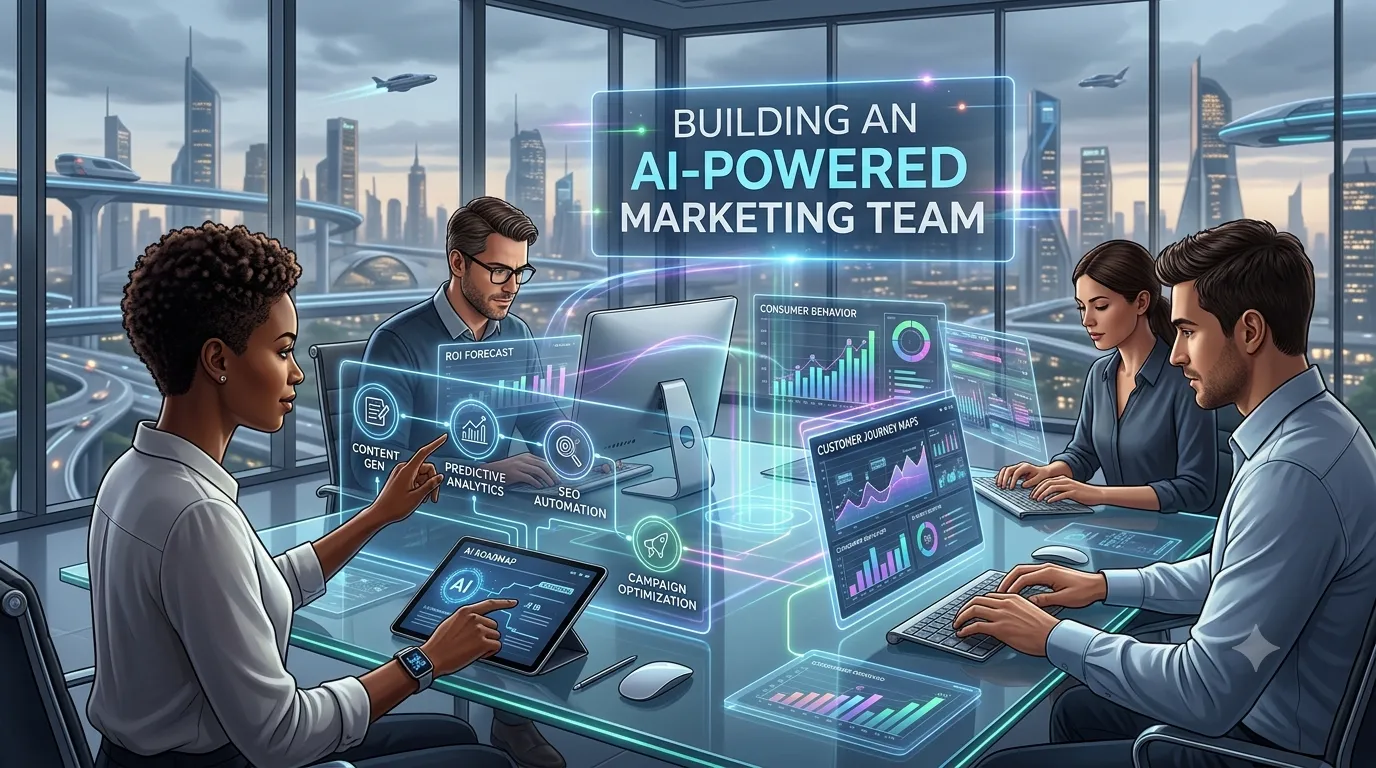
In this guide, I'll show you exactly how to build an AI-powered marketing team in 2026—the roles you need, the skills to look for, the workflows to design, and the culture to create. Whether you're a digital marketing leader, a business owner, or a student taking a digital marketing course, this is your blueprint for building a team that thrives in the AI era.
Let's dive in.
1. Why Traditional Team Structures Are Failing
Before we get into what works, let's understand what doesn't.
1.1 The Silo Problem
Most marketing teams are organized by channel or function: SEO team, social media team, content team, email team, analytics team. Each team works independently. Communication is minimal. Collaboration is rare. And opportunities are missed.
1.2 The Speed Problem
AI accelerates everything. Campaigns that used to take weeks can now be executed in hours. Traditional team structures can't keep up. Decisions are slow. Workflows are clunky. Opportunities are lost to faster competitors.
1.3 The Skill Problem
Traditional roles don't capture what's needed in an AI-powered world. You need people who can work across disciplines, who understand both strategy and AI tools, who can design workflows, not just execute within them.
2. The AI-Powered Marketing Team Structure
Here's the team structure that works in 2026.
2.1 The Core Roles
- AI Marketing Strategist: Designs AI-powered marketing systems and workflows. Bridges the gap between business goals and AI capabilities.
- AI Workflow Architect: Builds and optimizes the workflows that combine human and AI efforts. Ensures everything runs smoothly.
- Prompt Engineer: Crafts the precise language that gets the best results from AI tools. This is the "translator" between human intent and AI output.
- Content Strategist: Creates the content vision and ensures all content is on-brand, valuable, and aligned with business goals.
- Creative Lead: Brings originality and emotional resonance to marketing. AI can't replicate creativity—this is where humans win.
- AI Ethics Officer: Ensures responsible, transparent, and fair AI use. Protects the brand's reputation.
- Data and Insights Lead: Analyzes performance data and provides actionable recommendations. Bridges the gap between data and strategy.
2.2 The Supporting Roles
- Social Media Manager: Community building, engagement, and platform strategy
- SEO Specialist: Authority building and GEO (Generative Engine Optimization)
- Email Marketing Specialist: AI-driven personalization and automation
- Analytics Specialist: Data tracking, reporting, and optimization
3. The Skills You Need to Hire For
Here are the skills that matter most in an AI-powered marketing team.
3.1 AI Literacy
Everyone on the team needs to understand AI—what it can do, what it can't do, and how to use it effectively. This isn't optional anymore.
3.2 Strategic Thinking
AI can execute. Humans need to set direction. Look for people who can see the big picture, translate business goals into marketing strategies, and make judgment calls.
3.3 Prompt Engineering
The ability to communicate effectively with AI is a superpower. Look for people who can craft precise prompts that get exactly what they want from AI tools.
3.4 Cross-Functional Collaboration
AI-powered teams are highly collaborative. Look for people who can work across disciplines, communicate clearly, and contribute to shared goals.
3.5 Adaptability and Continuous Learning
The AI landscape changes fast. Look for people who are curious, eager to learn, and comfortable with change.
3.6 Emotional Intelligence
Marketing is ultimately about people. Understanding human psychology, building connections, and communicating with empathy are irreplaceable skills.
4. The AI-Powered Workflow
Your team structure is only as good as your workflows. Here's how to design AI-powered workflows.
4.1 Map the Current Process
Start by mapping your current processes. Identify bottlenecks, handoffs, and decision points. This is your baseline.
4.2 Identify AI Opportunities
Look for tasks that can be automated or augmented with AI. Prioritize tasks that are repetitive, time-consuming, or data-driven.
4.3 Design the New Workflow
Design a workflow that combines human and AI strengths. Assign the right tasks to the right actors—human or AI.
4.4 Implement and Iterate
Implement the workflow, monitor performance, and continuously improve. Workflows are never finished.
5. The Culture of an AI-Powered Team
Structure and workflows matter, but culture is what makes it work.
5.1 Embrace Experimentation
AI is new. No one has all the answers. Create a culture where experimentation is encouraged and failure is a learning opportunity.
5.2 Prioritize Transparency
Be open about how you're using AI. Discuss challenges and successes. Build trust within the team and with stakeholders.
5.3 Foster Continuous Learning
AI evolves fast. Invest in ongoing training and development. Encourage team members to stay curious and keep learning.
5.4 Lead with Empathy
Change is hard. Support your team through the transition. Understand their concerns and help them see the opportunities.
6. How to Transition Your Existing Team
Here's how to move from a traditional team to an AI-powered one.
Step 1: Assess Current Skills
Evaluate your team's current capabilities. Where are the gaps? Who is ready for new responsibilities? Who needs support?
Step 2: Upskill Your Team
Invest in training. Send team members to courses, workshops, and conferences. Encourage self-directed learning. A digital marketing course that covers AI applications can be transformative.
Step 3: Redesign Roles
Evolve existing roles to reflect AI capabilities. Content creators become editors. Data analysts become insight generators. Everyone becomes more strategic.
Step 4: Hire for Gaps
Bring in new talent for roles you can't fill internally. AI strategists, prompt engineers, and workflow architects are in high demand.
Step 5: Iterate and Improve
This is an ongoing process. Continuously evaluate, adjust, and improve.
7. Real-World Examples
7.1 The Digital Marketing Course Provider
A digital marketing course provider restructured their marketing team around AI. They hired an AI strategist, prompt engineer, and workflow architect. They upskilled their content team to use AI for drafting and research. Within six months, their content output tripled and lead generation increased by 200%.
7.2 The B2B SaaS Company
A B2B SaaS company built an AI-powered marketing team with specialized roles. Their AI strategist designed automated lead nurturing workflows. Their prompt engineer created custom prompts for generating high-quality content. Their workflow architect integrated AI into every process. They reduced campaign execution time by 70%.
8. Conclusion: Build the Team of the Future
AI is reshaping marketing. The teams that win will be the ones that embrace this change. They'll restructure around AI capabilities, hire for new skills, and create workflows that combine human and AI strengths.
But here's the good news: You can build this team today. Start by assessing your current team. Identify the gaps. Invest in upskilling. Redesign roles. Hire for new capabilities. The future is already here—it's just not evenly distributed.
The choice is yours. Keep your old team structure, or build the AI-powered marketing team of the future.
Join the best Digital Marketing Course to master AI-powered marketing and team building in 2026.
Frequently Asked Questions (5 Unique FAQs)
❓ 1. How many people do I need on an AI-powered marketing team?
It depends on the size of your organization and your goals. A minimum team would include: AI strategist, content lead, creative lead, and analytics lead. As you grow, add specialized roles like prompt engineer, workflow architect, and AI ethics officer.
❓ 2. Can I transition my existing team to AI-powered roles?
Yes. Most roles can evolve to include AI capabilities. Content creators become editors. Data analysts become insight generators. Invest in upskilling and provide the support your team needs to adapt.
❓ 3. What's the most important role to hire for first?
An AI Marketing Strategist. This person will lead the transformation, design AI-powered systems, and bridge the gap between business goals and AI capabilities. Without strategic leadership, your AI efforts will be fragmented.
❓ 4. How much should I invest in AI training for my team?
At minimum, provide access to a digital marketing course that covers AI applications. Also invest in tool-specific training, workshops, and conferences. A modest investment in training pays huge dividends in productivity and results.
❓ 5. How do I measure the success of an AI-powered team?
Track both output and impact metrics: content volume, campaign velocity, quality scores, lead generation, conversion rates, and ROI. Also track team satisfaction and retention—AI should make work more engaging, not more stressful.