You've seen the headlines. "AI will replace millions of workers." "ChatGPT is coming for your job." "The end of white-collar work."
Every day, another scary prediction. Every week, another tool that does something a human used to do. It's hard not to feel nervous. Hard not to wonder: am I next?
I've been watching this space closely. Not as a futurologist making wild predictions. As a marketer who uses AI every single day and pays attention to what's actually happening.
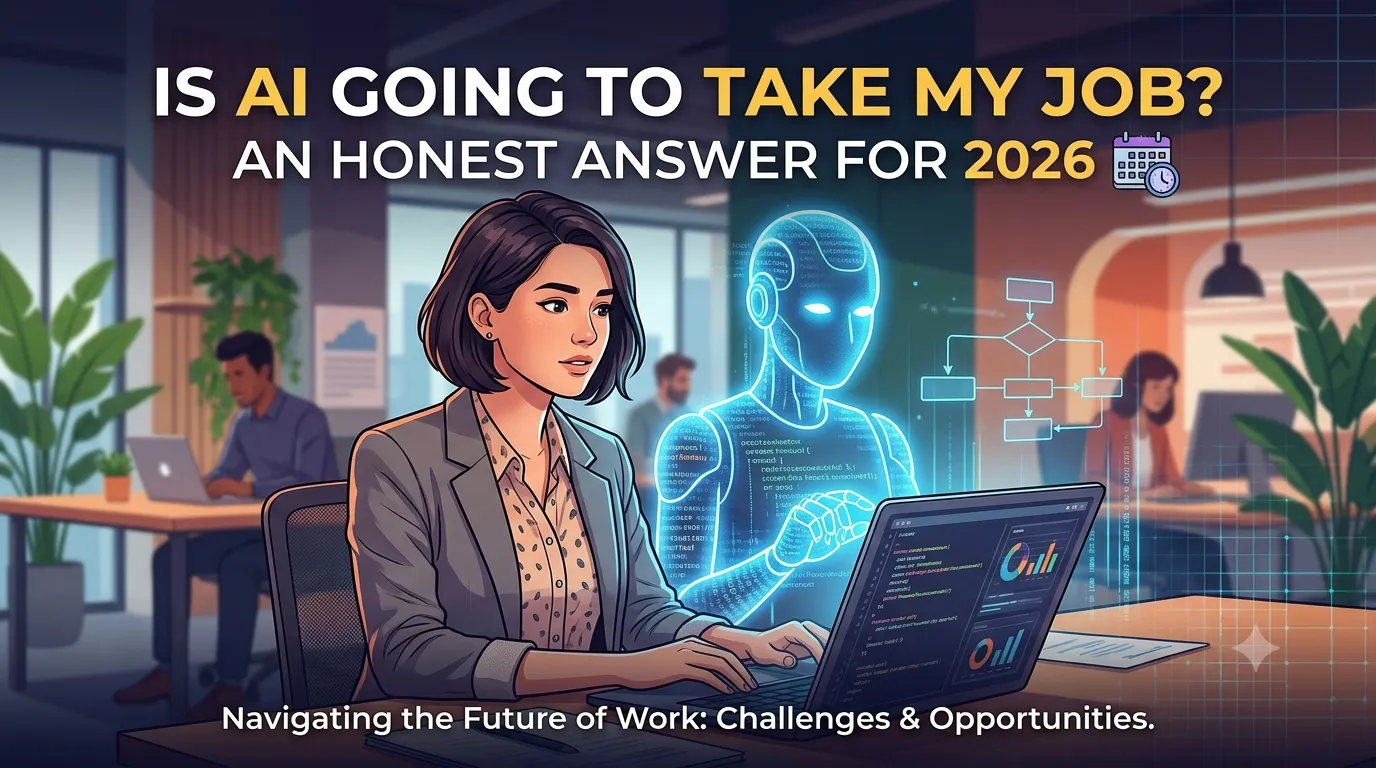
Here's the honest answer: AI will not take your job. But someone who uses AI better than you might.
Let me explain—without hype, without fear, and without sugar-coating.
The Short Answer (If You Only Read This)
AI will replace tasks, not jobs. It will replace workers who refuse to adapt. It will augment workers who learn to use it. The same pattern has happened with every major technological shift—spreadsheets didn't eliminate accountants, they made them more valuable. The internet didn't eliminate researchers, it made them faster. AI won't eliminate marketers, writers, designers, or analysts. It will eliminate the parts of their jobs that are repetitive, predictable, and rule-based .
Your job security depends on one thing: can you do things AI cannot? Strategy. Creativity. Empathy. Relationship building. Ethical judgment. Contextual understanding. These are the human skills that become more valuable, not less, as AI handles the boring stuff.
What AI Can Do Today (The Real Capabilities)
Let's be honest about what AI can actually do in 2026.
AI can write first drafts. Blog posts, emails, social captions, ad copy—AI generates decent first versions in seconds .
AI can analyze data. It can spot trends, identify anomalies, and summarize performance metrics .
AI can generate images and videos. Midjourney, Runway, Kling—these tools create visuals that would have required a team a few years ago .
AI can answer customer questions. Basic support, FAQs, common inquiries—AI handles these well .
AI can schedule posts, send emails, and automate workflows. Repetitive tasks are AI's specialty .
These capabilities are real. They're improving rapidly. And they are replacing some work that humans used to do. That's the honest truth.
What AI Cannot Do (The Human Advantage)
But here's the other side of the truth. AI has fundamental limitations that won't be solved anytime soon.
AI cannot set strategic direction. It doesn't understand business goals, market positioning, or competitive dynamics. It doesn't ask "should we enter this market?" or "is this brand positioning right?" Strategy requires judgment, experience, and understanding of context .
AI cannot feel genuine empathy. It can simulate caring. It cannot actually care. Marketing is fundamentally about human connection—understanding fears, dreams, frustrations, and desires. AI doesn't have these .
AI cannot build real relationships. People trust people, not algorithms. The relationships you build with clients, colleagues, and customers are AI-proof.
AI cannot make ethical judgments. It has no moral compass. It doesn't know right from wrong. It doesn't understand cultural nuance, harm, or exploitation. These decisions require humans .
AI cannot take responsibility. When something goes wrong, you can't fire the AI. You can't hold it accountable. A human is ultimately responsible for every AI output .
AI cannot be truly creative. It remixes existing ideas. It doesn't have original thoughts, personal experiences, or unique perspectives. The best creative work comes from human insight—understanding what moves people, what feels authentic, what resonates culturally .
Which Jobs Are Most at Risk?
Let's be specific. Not all jobs face the same level of risk.
High risk (jobs centered on routine, predictable tasks): Data entry, basic transcription, simple customer service (tier 1), appointment scheduling, document processing, basic translation, content rewriting .
These jobs are mostly about following rules. AI follows rules perfectly. If your job can be reduced to a checklist, it's at risk .
Medium risk (jobs with some routine, some judgment): Junior graphic design (basic layouts), basic copywriting (product descriptions), social media scheduling, basic data analysis, first-draft content creation .
AI will handle the routine parts. Humans will handle the judgment parts. The job won't disappear, but it will change significantly .
Low risk (jobs requiring high judgment, creativity, or human connection): Strategy, creative direction, client relationships, complex negotiation, crisis management, leadership, teaching/mentoring, high-stakes decision-making .
These roles require the human skills AI cannot replicate. They become more valuable as AI handles the routine work .
Which Skills Become More Valuable?
The skills that pay more in 2026 are exactly the skills AI cannot replicate.
Strategic thinking: Understanding business goals, market dynamics, and customer needs. Setting direction. Making trade-offs. AI can execute strategy. AI cannot set strategy.
Creativity with intent: Not just generating content—generating meaningful, resonant, culturally aware content that moves people. AI remixes. Humans create .
Relationship building: Trust, rapport, genuine connection. People buy from people they trust. AI cannot build trust.
Ethical judgment: Navigating complex situations where there's no clear right answer. Understanding context, harm, and consequences. AI has no moral compass.
Contextual understanding: Reading between the lines. Understanding what's not being said. Grasping nuance, sarcasm, cultural references. AI struggles with all of these .
Storytelling with lived experience: Sharing real failures, real lessons, real emotions. AI has no life. You do. That's your advantage.
Real Examples: How Jobs Are Changing, Not Disappearing
Copywriter: Before, they spent hours on first drafts. Now, they spend that time on strategy, voice, and editing. They produce more. They earn more. They're more valuable, not less .
Graphic designer: Before, they created every element from scratch. Now, they generate options with AI, then refine the best ones. They focus on creative direction, not execution .
Social media manager: Before, they scheduled posts manually. Now, they focus on community, strategy, and crisis response. The routine work is automated. The human work is amplified .
Data analyst: Before, they spent hours cleaning data. Now, they spend that time finding insights and telling stories. The technical drudgery is gone. The strategic value remains .
In every case, the job didn't disappear. The job changed. And the people who adapted became more valuable.
What You Can Do to Protect Your Career
1. Learn AI tools now. This is not optional. The marketer who resists AI will be replaced by the marketer who embraces it .
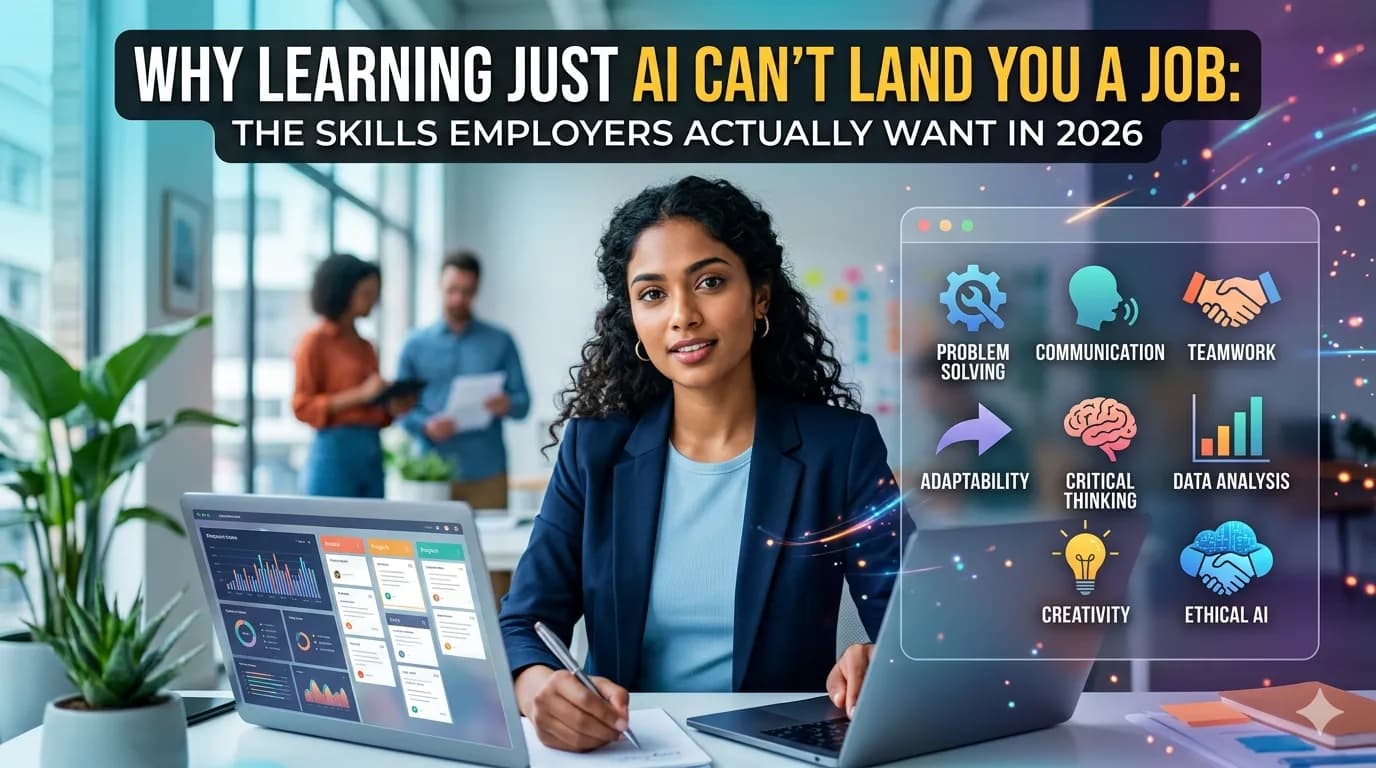
2. Focus on high-value human skills. Strategy. Creativity. Empathy. Relationship building. Ethical judgment. These are AI-proof. Double down on them.
3. Become a generalist who specializes in AI management. Understand how different AI tools work together. How to set up agents. How to manage outputs. This is the new core competency.
4. Build your personal brand. AI generates generic content. Your unique voice, experiences, and perspective are irreplaceable. Share them. Build an audience.
5. Never stop learning. AI evolves monthly. New tools emerge weekly. The people who thrive stay curious, experiment constantly, and adapt quickly.
The 2026 Reality Check
Are companies laying off people because of AI? Yes, some. Are they hiring for new roles that didn't exist before? Also yes .
The net effect isn't job loss. It's job transformation. Some roles shrink. New roles emerge. The people who adapt get hired. The people who resist get left behind .
This is not the first time technology has disrupted work. Spreadsheets changed accounting. The internet changed research. Smartphones changed communication. AI is no different—it's just faster .
The Most Important Question
The question isn't "will AI take my job?" The question is "will I adapt faster than AI evolves?"
AI is improving rapidly. But humans who learn to use AI are improving even faster. The combination of human judgment + AI speed is unbeatable .
Don't compete with AI. Complement it. Use it as a tool, not as a replacement for your thinking.
Conclusion: Your Job Is Safe If You Adapt
AI will not take your job—if you learn to work with it. If you focus on the skills AI cannot replicate. If you stay curious, keep learning, and embrace change.
The people who lose their jobs to AI are the ones who ignore it. Who refuse to adapt. Who assume their current skills will always be enough.
That's not you. You're reading this. You're paying attention. You're preparing.
Your job is safe—because you're willing to change.
Frequently Asked Questions (FAQs)
1. Is AI going to replace content writers?
Not entirely. AI will replace content writers who only produce generic, first-draft content. It will augment content writers who focus on strategy, voice, research, and editing. The demand for high-quality, human-edited content is increasing, not decreasing .
2. Should I still study digital marketing if AI is taking over?
Yes, absolutely. Digital marketing fundamentals—strategy, audience understanding, psychology, analytics—are more important than ever. AI handles execution. Humans handle strategy. The best marketers in 2030 will be those who understand both marketing fundamentals and AI capabilities .
3. What jobs are safest from AI?
Jobs requiring high judgment, creativity, relationship building, and ethical decision-making. Strategy, creative direction, client relationships, crisis management, leadership, teaching, and complex negotiation. Anything that requires genuine human connection .
4. How do I know if my job is at risk?
Ask: what percentage of my day involves routine, predictable tasks? If the answer is high, your role will change. Ask: what percentage involves judgment, creativity, or human interaction? If the answer is low, your role is more exposed. The solution is to shift your focus toward high-value human skills.
5. How quickly is AI improving?
Fast. Faster than any technology in history. But the rate of improvement in AI is matched by the rate of human adaptation. The people who learn AI tools are improving just as fast. The race isn't human vs AI. It's human-with-AI vs human-without-AI.